Route details, maps, pubs, features, local history and folklore for a wide variety of walks focusing primarily on Norfolk and Suffolk

Walks
Showing posts sorted by date for query Boston. Sort by relevance Show all posts

Tuesday, 17 December 2019

Lincolnshire Coast Path - Boston to Wrangle

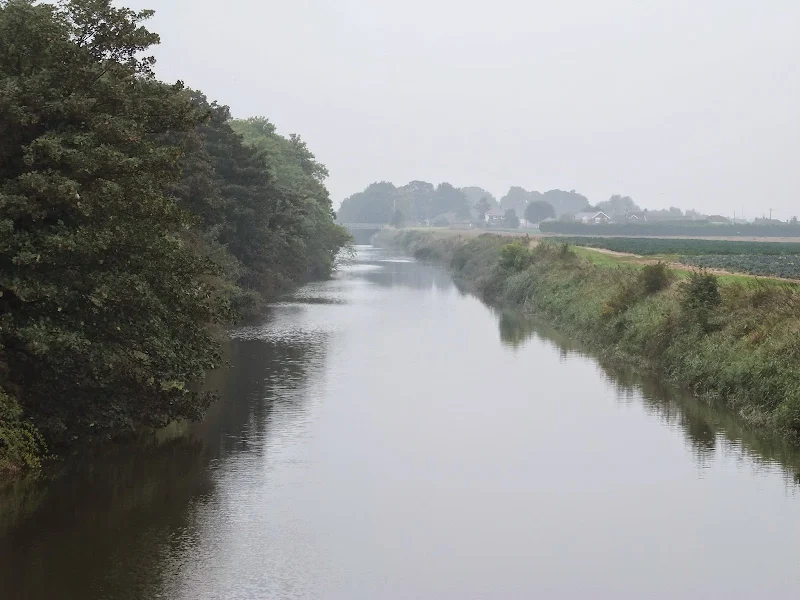
Hobhole Drain from Freiston Bridge looking north

An 10 mile beach walk from Boston to Wrangle

An alternative route to the coastal defence banks that provides a change to the marsh views. Open flat farmland, tiny hamlets, large churches and plenty of pubs along the way. Not strictly part of a coast path but this route roughly follows the coast of medieval times when Wrangle boasted the third largest harbour along this section of coastline.

Monday, 16 December 2019

Walk Around the Wash - Boston to Fosdyke

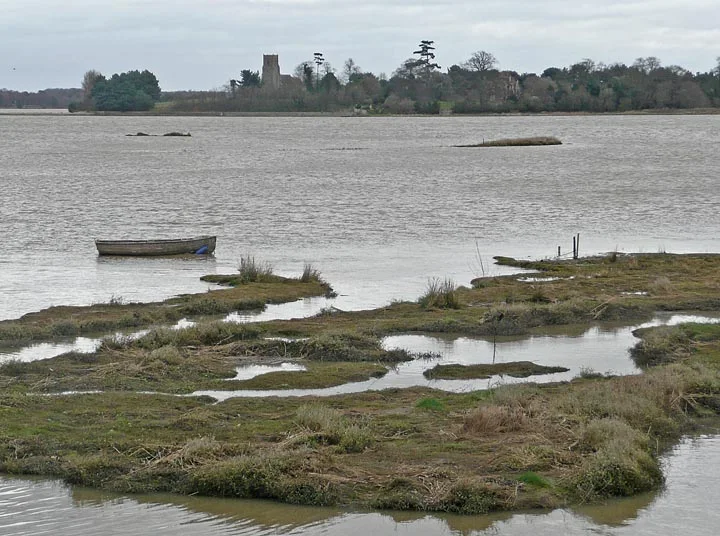
Haven River

An 11 mile along the sea defence banks from Boston to Fosdyke

This walks follows the start of the Macmillan Way as the first stage of the walk around the Wash. The route follows the Haven river before heading down to Fosdyke bridge on the River Welland. The walk is typified with acres of flat marsh, water filled creeks, wide open skies and views for miles around.

Sunday, 20 January 2019

Walk Around the Wash - Fosdyke to Sutton Bridge

River Nene at Scott Lighthouse

An 18 mile along the sea defence banks from Fosdyke to Sutton Bridge

A fairly extensive walk into the wide open expanse of the Wash along defence banks that lead the way around the extremities of the reclaimed land. It is awe-inspiring, it is remote. An RAF bombing range occupies a length of the furthermost parts but this does not restrict the use of the path. The eastern side of this walk is said to be the area that King John lost the crown jewels in the 13th century when he attempted to cross the Wash.

Wednesday, 9 January 2019

In Search of the Mysteries and Legends of Iken and St Botolph

A 7 mile walk along the Alde estuary, following the Suffolk Coast Path from Snape to Iken.

There are disputes as to whether Iken is the land of Icanho that St Botolph was granted by King Ethelmund to build his minster in the 7th century. If it was then there were marsh demons in these parts during those time and one can still feel the eeriness of the area with the mysterious Yarn Hill where Botolph reputedly drove away the ghosts and marsh demons in order to build his minster. It was eventually completed on the site of the historic church at Iken which still bears his name. The church is a fascinating place to visit - be sure to spend a little time here and see St Botolphs stone cross which was unearthed in 1977 and is on display within the church.

Tuesday, 8 January 2019

The Iceni Way - Kings Lynn to Hunstanton

Castle Rising

A 20 mile walk along the Kings Lynn to Hunstanton section of the Iceni Way

There is no official footpath or right of way to walk the complete distance along the coast between Kings Lynn and Hunstanton. It can be done by navigating the defence banks and farm tracks and ignoring the odd 'No Access' sign. However, an alternative walk to link these two towns is to use the Iceni Way. This is a walk designated by the Ramblers using existing tracks and footpaths linking the interesting and scenic villages of Castle Rising, Sandringham and Dersingham before it navigates back to the shores of the Wash at Snettisham. With vast expanses of sand when the tide is out, this part of the coast is truly an awe-inspiring sight looking across towards Boston and Skegness. You can walk out for miles before the sea is reached.

Kings Lynn to Hunstanton Walk - Essential Information

Walk Statistics:

  • Start location: Kings Lynn 
  • End location: Hunstanton 
  • Distance:   miles (  km)
  • Total Gain:   ft (  metre)
  • Total Descent:   ft (  metre)
  • Min Height:   ft (  metre)
  • Max Height:   ft (  metre)
  • Walk Time:  
  • Walk type: Linear
  • Walk Grade: Easy
  • Terrain:

Maps:

The following maps and services can assist in navigating this route. There are links to printed maps and links to downloadable GPX route data for importing into navigational software and apps.


Accommodation:

Mill Farm Camping and Caravan siteView in OS Map | View in Google Map
Website
Description
Mill Farm camping and caravan site, Wells-next-the-sea. Close to town and basic amenities

Transport:

Details of public transport that is required for the walk

Various Operators - Bus Service
Service Details
Coasthopper CH1, CH2, CH3 - Unfortunately, in recent years the highly acclaimed Coasthopper bus service has suffered from subsequent takeovers with a consequent deterioration of the service and continuing doubts upon is viability. Due to its constant changing operators, it is therefore best to use the Traveline website to determine the current timetables and services.
Timetable

Route Verification Details

  • Date of Walk: 2011-07-02
  • Walk Time: 10:00 to 17:30
  • Walkers: Griffmonster, Kat
  • Weather Conditions: Very warm day, plenty of sunshine

Walk Notes

This was the final part of the Norfolk Coast which we had yet to walk and it had taken some time to work out the route to take. Initially the consideration of strictly following the coastline was contemplated but these provided some apprehension as it requires traversing private tracks with the prospect of encountering angry land-owners. It was the Ramblers Association that brought attention to the so called Iceni Way, a route to link the Kings Lynn and Hunstantion, making use of recognised public rights of way. A detailed guide can be purchased from the Ramblers Association which is well worth getting for those contemplating this route. Although the trail is some way off of the coast, it does visit the historic settlements of Castle Rising and Sandringham to provide additional interest.

Like most of the North Norfolk Coast, this section is served by the Coasthopper bus service. At the time of walking this was an excellent and well used service provided by the Norfolk Green company. Unfortunately, although well patronised the service has been sold off and has become fragmented although the western end between Kings Lynn and Hunstanton is still well served. For this specific walk, a base camp was set up at Wells-next-the-sea, the Mill Farm site a personal favourite although being fairly basic probably it nonetheless offers all that a walker requires and is in close proximity to the town centre. Setting out from Wells does provide some logistic challenges and in order to achieve the walk within the constraints of the bus timetable requires setting out on the early bus in order to provide a full days walking and rendezvous with the last bus back.

The walk will not disappoint, Castle Rising and Sandringham definitely rewarding the walker with choosing this route option. Although with limited time one can only wander through these places and briefly admire and soak up the history, it nonetheless does inspire future visits where more time is available. The broad road up to Sandringham is littered with tourist cars and motorvans parked up on the wide verges.

Once at Snettisham one is provided with the vast open panoramas of the Wash, with sands that seem to disappear into the horizon at low tide. In the distance, given a clear day such as this, the Lincolnshire coast can clearly be seen on the opposite side to this huge inlet of water, the drainage area to the rivers Nene, Ouse and Welland.

Castle Rising Castle

Directions

The path follows the Iceni Way. Unfortunately there are no waymarkers to provide directions and therefore a copy of the Iceni Way guide from the Ramblers Association and an OS map are vital. The path uses a mixture of footpaths and tracks and some road walking to link Kings Lynn and Hunstanton. Taking in South Wooton, North Wooton, Castle Rising, Sandringham and Dersingham, the path then heads out to the coast at Snettisham from where it is a coastal walk up to Hunstanton.

Kings Lynn to Dersingham

From the centre of Kings Lynn the path follows the old railway track out to the edge of South Wooton on the A1078.Head down the road and turn the first left up0 Hall Lane. There's a path on the right heading in the same general direction as the road and this comes out by the Church. Carry straight on along the footpath opposite the church and then straight ahead up the road this comes out on. A footpath on the right of the road leads through to North Wooton, heading into the housing estate on the right of the path. Walk down to the main road, cross and carry on the footpath which bears round to the left behind the houses. Go all the way through on this path until it comes out on Little Car Road. Turn right at the junction and take the footpath on the left a few hundred yards on. This leads through to Castle Rising where it follows the road through the village, down to the Castle then back round a sharp bend. As the road bends round again carry straight on and follow this old road to the main A149. Walk along the cycle track until this ends. Cross the road and head up the little road to Sandringham. There is now a few miles of walking along these roads past Sandringham and down into Dersingham.

Dersingham to Hunstanton

Take Station Road out of Dersingham, cross the main A149 and a track leads all the way down to the beach. Follow the beach northwards passing by Snettisham and Heacham and ending at Hunstanton.

Memorial at SandringhamSculpture marking the National Cycle Network Route 1
On the left Memorial at Sandringham; On the right Sculpture marking the National Cycle Network Route 1

Pubs

Coach and Horses, Dersingham View in OS Map | View in Google Map

Image of pub
Address
Coach and Horses, Dersingham
Website

A traditional pub village offering Traditional home-cooked food and guest ales as well as accommodation.

Review

A thrist quenching pint of Woodfordes Wherry.

The Feathers, Dersingham View in OS Map | View in Google Map

Image of pub
Address
The Feathers, Dersingham
Website

This former carrstone coaching inn is steeped in royal history dating back to 1882 when the hotel was purchased as part of the Sandringham estate for Albert Edward, Prince of Wales and named The Feathers in his honour. Prior to its royal connections it was named The Cock until fire damaged the building in the 1800's. It was subsequently rebuilt and named The Lamb.

The large building accommodates a range of en-suite bedrooms, a restaurant, three bars, and an outdoor patio and large landscaped gardens including a childrens area.

Review

Busy yet friendly pub with a large garden. Excellent food. Serving Adnams and Woodfordes.

Ruins of St Felix Church

Features

Castle Rising CastleView in OS Map | View in Google Map

The castle keep at Castle Rising is one of the most famous twelfth-century hall-keeps in the country. To the north of the castle is a ruined church that dates to around 1100, and both this church and the keep appear to have been rendered and whitewashed during the early medieval period.

The earthworks surrounding the castle keep are some of the largest in the country, although both the castle and the earthworks were originally half their current size. Their present appearance is the result of a major building programme of the late 12th or early 13th century.

It is possible that this major rebuilding took place as a reaction to the Revolt of 1173–1174 and the increased military activity generated. The chief rebel in East Anglia was Hugh Bigod, 1st Earl of Norfolk a rival to William d'Aubigny, who seized Norwich Castle during the rebellion. William returned from Normandy to meet Bigod in battle, and the upgrading of Castle Rising may be seen as a result of this.

During the Anarchy the castle was the site of a mint producing pennies for King Stephen. Between 1330 and 1358, it was the residence of the displaced former queen, Isabella of France, known as the 'she-wolf of France'. She married Edward ll in 1308, but soon found he preferred the company of men. She had an affair Roger Mortimer and in 1326 they took the throne from Edward ll. They imprisoned him in Berkeley Castle and in 1327 had him murdered. They enjoyed a brief period in power but Isabella`s son, Edward lll, took control in 1330 and had Mortimer executed. Unable to bring himself to kill his mother, Edward III is thought to have had Isabella imprisoned within the castle. In her later years she is said to have suffered dementia and spent most of her time in the upper floors of the castle which would probably explain the screams of a mad woman which have been reported coming from the castle in the middle of the night!

References

Ruins of St Felix ChurchView in OS Map | View in Google Map

From Babingley Bridge on the former main road between Castle Rising and the modern A149 one can just view the remains of St Felix Church in the meadows close to the river. This ivy clad ruin is said to be the first Christian Church erected in the county and was still a working church in the early 19th century. All that remains is the 14th century tower and an empty shell including a blocked off chancel with a window set into it.

References

Sandringham EstateView in OS Map | View in Google Map

Sandringham is the country retreat of Her Majesty The Queen, and has been the private home of four generations of British monarchs since 1862. The house, set in 24 hectares of stunning gardens, and is at the heart of the 8,000-hectare Sandringham Estate, 240 hectares of which make up the woodland and heath of the Country Park. The Estate includes the tidal mudflats of the Wash, woodland and wetland, arable, livestock and fruit farms, and commercial and residential properties and a museum. It is open to the public free of charge every day of the year.

The site has been occupied since Elizabethan times, and, in 1771, architect Cornish Henley cleared the site to build Sandringham Hall. The hall was modified during the 19th century by Charles Spencer Cowper, a stepson of Lord Palmerston, who added an elaborate porch and conservatory, designed by architect Samuel Sanders Teulon. In 1862, the hall was purchased by Queen Victoria at the request of the Prince of Wales (the future Edward VII) as a home for himself and his new bride, Alexandra. However, in 1865, two years after moving in, the prince found the hall's size insufficient for his needs, and he commissioned A J Humbert to raze the hall and create a larger building.

Since King George VI died in 1952 at Sandringham, Queen Elizabeth II's custom has been to spend the anniversary of her father's death and her own Accession privately with her family at the House. It is her official base until February each year. The house was first opened to the public in 1977, and there is a museum with displays of Royal life and Estate history.
References
Hunstanton
Hunstanton

Gallery

Below are a selection of images taken from from the photo album for this walk. Feel free to browse through these or click on an image to view a larger version in the Gallery.

Summary of Document Changes

Last Updated: 2021-12-07

2011-08-07 : Initial publication
2017-02-05 : General website updates
2019-01-08 : General website updates + updates to notes
2021-03-17 : Update website improvements and removal of ViewRanger reliance
2021-12-01 : Removal of ViewRanger links due to its imminent demise

Tuesday, 1 January 2019

Lincolnshire Coast Path

Cleethorpes

An overview of a possible route for a Lincolnshire Coast Path

There is currently no official Lincolnshire Coast Path although Natural England are committed to having something in place as part of the English Coast Path by 2020. This overview details the current possible routes taken from research conducted into a walk between Cleethorpes and Boston during September 2014

Saturday, 15 December 2018

Lincolnshire Coast Path - Skegness to Gibraltar Point

Beach looking towards Gibraltar Point

A 7.5 mile beach walk from Skegness to Gibraltar Point

Gibraltar Point, with its Nature Reserve, Visitor Centre and Wash Study Centre can be accessed via a dedicated road from Skegness town centre. This walk attempts to access the Point by way of the beach. It is imperative that one heeds the tide times in order to walk this route, but those doing so will be treated to some outstanding beach views and the solitude that this deserted area brings with it.

Thursday, 6 December 2018

Walk Around the Wash - Sutton Bridge to West Lynn

Path past the Scott Lighthouse

The 14 miles Peter Scott Walk from Sutton Bridge to West Lynn, crossing the border from Lincolnshire to Norfolk

Leaving Sutton Bridge, this renowned walk heads down to the lighthouse made famous by the wildfowler turned conservationist Peter Scott. Few folk venture beyond this but those that do the full walk will be treated to the wide open views with the North Norfolk coast sitting on the horizon and the Wash Islands, a failed venture to create fresh water havens in this land of marsh and mud flats.

Wednesday, 5 December 2018

Coast Path around The Wash

Peter Scott Lighthouse

An overview of a walk around the Wash from Boston to Kings Lynn

Three rivers flow out into the Wash, namely the Welland, the Nene and The Ouse. Public footpaths follow the defence banks that border these rivers and the marshes that adjoin the coastline in between. The A17 provides bridges across these watercourses at Fosdyke, Sutton Bridge and West Lynn respectively. The walks are typical of this fenland area with vast open landscapes and huge skies which provide a unique charm to this part of the English coast.

Tuesday, 20 November 2018

Lincolnshire Coast Path - Wrangle to Wainfleet

Batemans brewery from the River Steeping

An 7.5 mile beach walk from Wrangle to Wainfleet

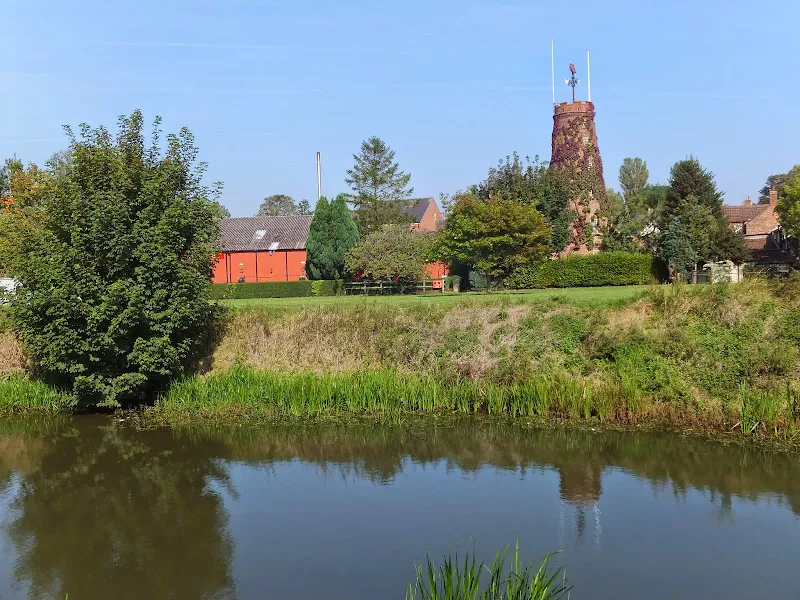
An alternative route to the coastal defence banks that provides a little more interest. Open flat farmland, tiny hamlets and a long straight footpath that was once thought to have been a Roman road. The end of the walk is at Batemans Brewery where a worthy reward of some handsome ale can be purchased in this unique setting within the confines of an old windmill.

Friday, 18 July 2014

2014 NNR Beer Festival Beer List and Tasting Notes

The 13th North Norfolk Railway Beer Festival

The 13th North Norfolk Railway Beer Festival

The 13th North Norfolk Railway Beer Festival Tasting Notes

A listing of all the ales on offer, along with tasting notes, for the 13th North Norfolk Railway Beer Festival. Excellent selection from across the UK. Music from the King Size Papas, Mista Splinta and Ugly Dog Skiffle Combo. Hog Roast. Steam trains. Some great walks around the area. What else could anyone want.

Indexes and Info

East Suffolk PRoW Access

The Public Rights of Way (PRoW) within the Suffolk Coastal area between Aldeburgh and Southwold are subject to being blocked up and diverted due to the extensive industrial projects that are currently taking place in the area including the Sizewell C development and various wind farm projects. A PRoW Access page details known issues in the area. There is also a link to the Works Tracker that contains details of known Blocking Up and Diversion Orders

Featured Walk

In Search of Sizewell Chapel

A 10 mile walk following the southern side of the parish boundary of Leiston in Suffolk This walk follows the route of a 17th century peram...

What is GPX

All you need to know about GPX, electronic mapping and how to use modern apps and mobile devices as navigation devices

Popular Walks

Diary of a Suffolk Common

The ramblings and musing of the Griffmonster