Route details, maps, pubs, features, local history and folklore for a wide variety of walks focusing primarily on Norfolk and Suffolk

Walks
Showing posts sorted by relevance for query Eye. Sort by date Show all posts

Tuesday, 20 March 2018

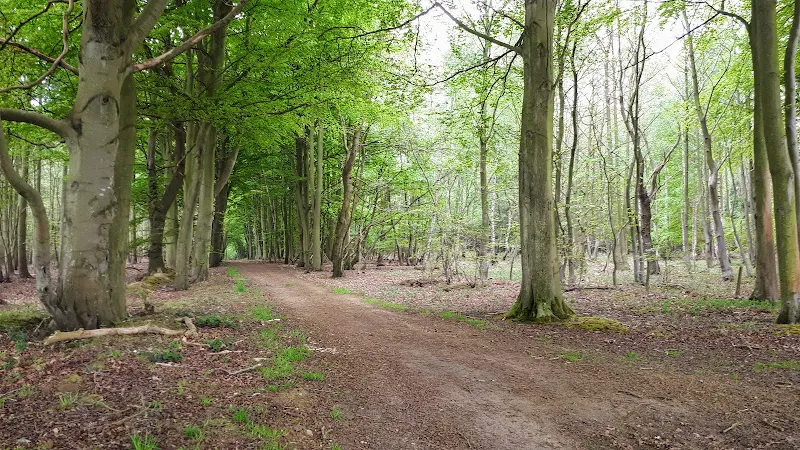
Eye to Hoxne Circular Walk

Hoxne village

A 10 mile walk around the Suffolk villages of Eye and Hoxne

Hoxne is said to be where St Edmund was Martyred by the Viking invaders in the 9th century. The village is full of reminders of the gruesome event including the cross which marks the place of the oak tree his assailants tied him to, beat him, fired arrows at and eventually beheaded and the bridge he reputedly hid trying to escape his captors.

Wednesday, 13 February 2019

South West Coast Path - Langton Herring to Weymouth

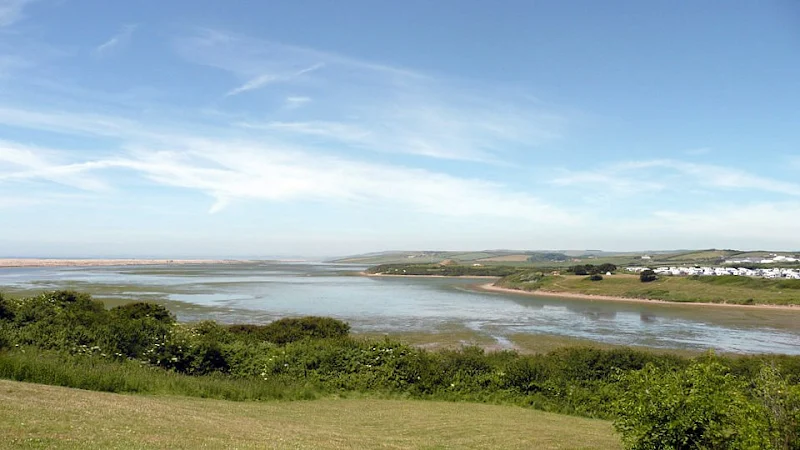
View across the Fleet

A 10 mile walk along the South West Coast Path between Langton Herring and Weymouth

An easy walk following Chesil Beach through to Weymouth. The path follows the contours of the land keeping close to the shore. At Weymouth the eastern coastline spreads out eastwards presenting the next challenge.

This section of the South West Coast Path was set around a base camp at the Bagwell touring site at Langton Herring. This site is close to the road into Weymouth providing easy access to public transport and close to the Coast Path with footpaths leading down to the trail just below Langton Herring village. The path follows the waterline of the Fleet, the enclosed waters that sit between the mainland and Chesil Beach, the large shingle Bank that stretches all the way through to Portland, the island at the southern tip of Weymouth.

The path cuts across a small headland known as Herbury and then past Moonfleet Manor House a large 30 room Georgian building used as a hotel and spa. The house is the central location for the namesake novel by J. Mead Faulkner set in times when piracy and smuggling abounded. The name of the house is derived from Maximillion Mohune who built the house, literally Mohunes of Fleet which was corrupted to Moonfleet.

The walk is easy and relaxed with no real challenges, more like an amble in the park rather than a hike along the South West Coast Path. Given a glorious sunny day such as that when this instance of the walk was undertaken, it really is an utter pleasure to wander.

The path on this section ends at Ferry Bridge, the connecting point between the mainland and Portland where a road leads across to the island via the Ferry Bridge. The Ferry Bridge Inn stood here, in a prominent position with views across to Portland and westwards along the Fleet. One would have thought such a position would deem it to be a busy pub but certainly this was not the case on visiting during this walk when we were the only patrons. The pub has since closed and has subsequently been demolished.

The coast path continues with a circular walk around Portland. That is a section left for another walk day and detailed on Portland Circular Walk. For this walk we continue into Weymouth town, following the route of the former Portland Branch Line. The path diverges from the old trackbed at the Nothe Peninsular where a 19th century fort sits at its head. This peninsular forms a natural harbour on its northern side where the River Wey drains into the sea. One one can walk up to the Town Bridge to cross the river, but it is much more fun to take the ferry and witness the numerous sailing craft moored on either side. A fish eye view of the river. Well a sailors eye view anyway. On this expedition the Pelican sailing ship was moored in the harbour. Built in 1948 this tall ship made its living as an arctic trawler before being restored in 2007 and subsequently used as a sail training ship. A magnificent sight.

The town of Weymouth sits on a sheltered bay at the mouth of the River Wey. It was built as a prominent seaport whose trade dates back to medieval times. In these modern times it thrives on tourism and is an unabashed, unashamed English seaside resort with all the connotations that one expects from such. Kiss me quick hats. Ice Cream. Sandy Beaches where holidaymakers soak up the sun. Not the place for the rural aficionado such as myself but nonetheless it still presents that sense of arrival. After walking the coast path from Exmouth, this is the first major town and such civilisation marks an arrival, a completion of a major section. Because Weymouth and Portland jut out into the English Channel the coast eastwards is always hidden from view when walking from the west. From Weymouth a whole new challenge is presented ahead with the coastline stretching around to Lulworth and Kimmeridge and beyond.

There are buses from Weymouth back to the campsite including the Jurassic Coast service which runs past the site entrance. Later buses run through to Chickerell which is a short one mile walk back to the campsite. On this occasion a later bus was caught which did present the unwitting passenger to the less salubrious side of the town where Feral youths stand in the road purposefully forcing the bus to stop with scowls on their faces and abusive words from their mouths and sign language that did not take someone who was proficient in such skills to interpret. It is a sad fact that such reprobates fail to see the beauty that is around them. This coast is a glory with so much to explore yet they appear to restrict themselves to the concrete urbanisation.

Saturday, 26 January 2019

Norfolk Coast Path - Cley to Wells-next-the-Sea

Marshes near Blakeney

A 10 mile walk following the Norfolk Coast Path between Cley and Wells-next-the-Sea

An easy walk along the Norfolk Coast Path navigating out across the marshes to Blakeney then along the marsh perimeter to Wells. Blakeney is a worthy stopping point to explore Mariners Hill and the Guildhall and take in the legends of the Blakeney tunnels and the tragic story of the Blakeney Fiddler who is depicted on the village sign.

Wednesday, 18 December 2019

Paston Way to Gunton - Pubs, Churches and Wartime Conspiracies

Northrepps from the lane to Overstrand

A 7 mile walk along Norfolk's Paston Way from Cromer to Gunton.

The Paston Way has a few alternative paths that stray from its main route between North Walsham and Cromer, and this walk takes the optional route out to Gunton from where a train can be taken back to Cromer. There are some worthy country pubs along this simple walk so a good old English pub crawl can also be had along with taking in the sights of the impressive churches at Northrepps and Southrepps plus local tales of wartime German conspiracies!

Saturday, 26 January 2019

An Extended Walk around the Rendlesham UFO Trail

A 12 mile circular walk starting at Eyke and incorporating the UFO Trail in Suffolk's Rendlesham Forest

The Rendlesham UFO trail is a waymarked 3 mile trail around the eastern end of Rendlesham Forest that navigates around the key areas that were involved in the Rendlesham Forest Incident of 1980 in which both civilian and military personnel witnessed unexplained craft land within the forest. Although this can be walked by parking up at the visitor car-park in the forest, a longer alternative is to take the footpaths from Eyke, and make a day of this most wonderful and intriguing part of Suffolk.

Sunday, 16 December 2018

Alternative Coast Path Route from Sheringham to Cley

View from the hillside between Salthouse and Cley

A 10 mile alternative route for the North Norfolk Coast Path between Sheringham and Cley

This walk takes diversions from the official route of the North Norfolk Coast Path via the North Norfolk Railway and the Weybourne Priory Ruins. A further alternative is then used to navigate away from the strenuous shingle walk along the coast to a more gentle amble up to the village of Salthouse and across the hills to Cley. This provides a scenic and interesting alternative to the official route of the North Norfolk Coast Path and gives some spectacular views across the marshes from the hillside between Salthouse and Cley.

Saturday, 7 December 2019

South West Coast Path - Perranporth to Newquay

Tidal bridge across The Gannel Estuary

An 11 mile walk along the South West Coast Path between Perranporth and Newquay

By South West Coast Path standards this is an easy walk along the low level cliffs with no particularly difficult climbs with the usual spectacular coastal views. The main obstacle on this section is crossing the River Gannel estuary. There are three footbridges but these are all dependant upon the state of the tide so tide tables need to be consulted and the walk planned appropriately.

Monday, 17 December 2018

Tales of Sundials, Witchcraft and Ghostly happenings in Saxmundham

A 2 mile circular walk around the Suffolk town of Saxmundham using the Town Trail

A simple tour of Saxmundham that can be added onto the East Suffolk Line Walks or to while away a couple of hours on a lazy afternoon, including searching out the unique tombstone sundial in St Johns churchyard, and finding the haunted Monks Cottages.

Tales of witchcraft, sundials and ghostly happenings in Saxmundham - Essential Information

Walk Statistics:

  • Start location: Saxmundham 
  • Distance:   miles (  km)
  • Total Gain:   ft (  metre)
  • Total Descent:   ft (  metre)
  • Min Height:   ft (  metre)
  • Max Height:   ft (  metre)
  • Walk Time:  
  • Walk type: Circular
  • Walk Grade: Easy
  • Terrain:

Maps:

The following maps and services can assist in navigating this route. There are links to printed maps and links to downloadable GPX route data for importing into navigational software and apps.


Route Verification Details

  • Date of Walk: 2012-02-11
  • Walk Time: 08:30 to 10:30
  • Walkers: Griffmonster, Kat
  • Weather Conditions: Cold but sunny winters day

Walk Notes

This walk was the result of being told about a gravestone in the churchyard at Saxmundham that had a working sundial designed into its stone. Having failed to locate this unique artefact on a previous visit, I was all the more resolute on finding it on this occasion. So, after wandering around the town trail musing over the railway, the old mill, the Monks Cottages and the River Fromus we arrived at the church. There is a block of graves to the south west but nothing obvious at first sight. On closer inspection the grave eventually revealed itself and what a wonder this simple yet effective tool is. Although the low sun was not strong enough to cast a shadow on this winters day, the simplicity of how this should work was obvious. A rectangular section with a semi-circular bottom graduated into hours and a shadow cast by the edge of the rectangle. A true wonder. Read more about this below in the walk features.

Although there is no firm evidence it is thought that Saxmundham takes its name from a Saxon thegn (a Saxon lord) named Seismund. There are references to the manor of Saxmundham in the Domesday Book of 1086 and in 1272 Henry III awarded a charter to John de Rammseye for Saxmundham to hold a market.

Saxmundham used to have plenty of pubs including the 16th century Angel Inn, closed in 1977 and now marked with a plaque above its door, plus also retaining its notable crinkle-crankle wall at the rear, the Railway (closed 2009) and the Coopers Dip (closed 2011). Sadly the last pub left in the town, the 17th century White Hart, closed its doors at the start of 2012. This is a sad reflection of the times we live in with pubs unable to compete with the cheap discounted booze available in supermarkets and the British Government appearing to be bent on a crusade against the demon drink and pubs in general. During the past few years the number of pubs around this part of Suffolk that have closed down is staggering. Not only we, the British public, are losing a place for refreshment and social interaction but we are also losing some of what can only be described as historic public buildings. It is so sad that many of these old inns and taverns dating from the middle ages will end up as private dwellings and we will never be able to sit and admire them from within. There is no doubt about it that we ARE losing our heritage. Having got off my soap-box, I must admit that the Coopers Dip and the Railway were not the most salubrious of establishments towards the end of their public lives. I speak from personal experience of having to attend Sunday evening pool games at both of these pubs where we had to dodge the frequent brawls and foul language, but this cannot be blamed solely upon the drink but also upon the management of such premises who allow these reprobates to drink too much. Today, there is just one bar left in the town, that at the Bell Hotel, but I have been reliably informed that this now only accepts custom from residents. What a sad state of affairs it is when a town the size of Saxmundham boasts no pubs at all.

For this posting I don't want to dwell upon the historic features around the walk as these are all well covered on the trail pages to the town website (http://www.saxmundham.org/touristinfo/towntrail.html) and I would merely be repeating the same facts. So please refer to this for a little history and information about the Railway Station, the old post-mill, the towns old buildings, the parish church of St John, and the town museum. Instead, for this post, I will concentrate on the walks aim, which was to find the gravestone sundial and also recount a tale from Saxmundham that was published in a variety of publications during the 19th century. As a finale there is a little ghost story from the Monks cottages. With these anecdotes, take a wander around this little town and as you peruse the physical remains of the history of Sax, also ponder over the local tales, the folklore that gives the physical history something of a soul. All of these investigations acan be found in the Features below.

Market Hall
Market Hall

Directions

A simple trail around the town of Saxmundham

Head to the railway station which is pretty much in the town centre. From here, continue across the railway line and up Albion Street until it bends to the right and junctions with Rendham Road. Turn left past the post-mill then left into Mill Road. Continue down the road, over the railway crossing and then turn right at the cross roads into South Entrance. Walk past the town sign next to Chantry House and up to the last housing in town which is Monks Cottages. Cross the road and return back into town then turn right at the crossroads past the supermarket car park, over the river bridge and up into St Johns churchyard. Return back down towards the town and cross the Waitrose car park and cut through into Fromus Square and back out onto the main street. Turn right and if you continue about a quarter of a mile beyond Brook Farm Road there is the entrance to Carlton Hall. Return back into town along North Entrance and under the railway bridge then bearing right in front of the old Angel pub to get back to the railway station.

Gravestone showing the distinctive rectangular sundialThe sundial clearly showing the hour markings
On the left Gravestone showing the distinctive rectangular sundial; On the right The sundial clearly showing the hour markings

Features

Saxmundham Tombstone with Integral SundialView in OS Map | View in Google Map

There is no recorded documentation as to why the grave of John Nollar that stands on the south west corner of St Johns churchyard, has a carved sundial contained within its stone. We do know that John Nollar was born in Rendham in 1667 to Thomas and Anne Nollar. He married Mary, born in 1670 but whose origins are unknown, and together they had 5 children, John, Mary, Thomas, Joseph and Anne. Mary passed away on 13th March 1724 followed by Johns passing on 1 August 1725 and they were both buried in St Johns churchyard and marked with a single headstone with the inscription . "The Remains of John Nollar Snr. and Mary his wife whose soul took flight John Nollars 1st August 1725 aged 58 years and Mary Nollar his wife...." after which the remaining inscription is concealed by the earth and grass.

The headstone faces an east west orientation along with the rest of the stones on that section of the churchyard. On each side of the stone there is a 3 inch rectangular recess that forms a half cylinder and is essentially a sundial. The recesses are on a slant to the vertical so that they point to the north star and are thus parallel to the earth's axis. Within the recesses are lined parallel graduations with the numbers 1, 2, 3, 4 and 5 on the west side and 7, 8, 9, 10 and 11 on the east side. The beauty about the design of this sundial is that it lacks a gnomon, the pointer that casts the shadow. Whoever designed this sundial came up with an ingenious solution which makes the edge of the recess the gnomon and this casts its shadow down into the recess with midday not marked as both recesses will be in shadow.

The sundial is said to be extremely accurate but the designer has no credit and the reason for its inclusion not revealed. Nonetheless this is a most remarkable and ingenious piece of handiwork that is well worth seeking out.

The Strange Tale of Magdalen HolydayView in OS Map | View in Google Map

Magdalen Holyday was the eighteen year old daughter of Rendham couple Phineas and Martha Holyday and was a live-in servant-maid to Mr. Simon Jones, minister of Saxmundham. She had been in his employ for three years when this tale came about and had earned a reputation of being a well behaved and decent young lady, civil in her speech and dutiful in her religion. She had been brought up as a loyal subject to the king and had renounced the likes of Oliver Cromwell and all what he stood for.

This tale starts in the year of 1672, on a day known as Lammas, the festival of the wheat harvest, August 1. This particular year it occurred on a Monday and at noon of that day, as expected, she was serving dinner to the parson, his wife and their daughter Rebecca who at the time was about to be married to a gospel minister from Yoxford. As Magdalen placed a suet dumpling down on a plate, she let out a loud shriek and stooped down in pain complaining that she had felt a sting on her upper leg as if a pin had pierced it. When she investigated she could see and feel a pin just under the surface of her skin but there was no break in the tissue for it to have gotten there. The pain was unrelenting and from this point on tormented her both day and night.

In these bygone days Suffolk was renowned for the number of witches who practised in the black arts and Magdalen had soon connected the fact that only a few days previous to her affliction she had denied an old crone who had come to the door of the house and begged a pin. This, she had assumed, was the repayment for her actions, a hex brought about by the witch she had denied.

It wasn't many days before the ministers wife, concerned for Magdalens welfare, sent for the assistance of two local doctors, both of high repute and well experienced in their professions. Despite their qualifications neither was able to detect or trace any evidence of a pin within Magdalens leg. She insisted that the pin was there but had worked itself deeper into her skin. As was the custom of those days, the doctors prescribed leeches to draw the blood but to no avail. The minister, meanwhile, offered his godly prayers and rang the church bells to try to chase the demons away but Magdalen's pains continued unabated, getting worse, now giving her dreams and apparitions at night. Sometimes she would see a creature resembling a mole scurrying into her bed, sometimes a terrorizing naked arm grasped across her body as she lay in bed.

Eventually, after much discussion, the doctors took her to the Baronet Sir John Rouse of Henham, a Member of Parliament for Dunwich and Eye and upon his jurisdiction they gave her a concoction consisting of southernwood, an antiseptic plant with a strong camphor-like odour, mugwort, commonly known as wormwood and vervain. This she was then required to drink. They also anointed her leg with an ointment made from four ounces of Dog's grease mixed with two ounces of bear's fat, eight ounces of capon's grease, 24 slips of mistletoe, cut in pieces and powdered with gum of Venice turpentine. This mixture was mixed and left in a phial exposed to the sun for nine days until it formed a green balsam. She was then required to rub this into her skin daily for three weeks.

She carried out the prescription as required but her ailments became worse, causing constant sickness during which she vomited a variety of items including parings of nails, bits of spoons, triangular pieces of brass, crooked pins, bodkins, lumps of red hair, broken egg-shells, parchment shavings, a hen's leg bone, 1200 worms, pieces of glass, bones resembling the great teeth of a horse, some unidentified luminous matter and sal petri (this is the name for nitrate of potash, a salt which produces dreadful effects when largely taken). After all this, as the medical practitioners were giving up hope she brought up with a violent retching, a whole row of pins stuck on blew paper.

After this the vomiting ceased and she began to recover. Naturally the Doctors perceived that it was their potent drugs that had been the cure. But who knows, maybe it was the witches curse, how else did so many and varied amount of items manage to get lodged into her stomach to be vomited up. Magdalen went on to live a happy life, her afflictions never to return. She married an honest but poor man who was the steward to Sir John Heveninghara to whom she bore four healthy children.

References

A Spooky Tale from the Monks CottagesView in OS Map | View in Google Map

On the South Entrance to Saxmundham, as the road leaves the town, on the right hand side on the road, there are a group of cottages with a plaque high up on the wall declaring them to be Monks Cottages. At one time, during the 1600's these used to be a part of a very large and grand manor house. Prior to this, in the 14th century, the site housed several chapels known as chantries. Before we go into further detail, it is vital to know that during the middle-ages there was a general belief that after death the soul passed into purgatory, which was a place of temporary punishment where the soul is made ready for Heaven. Prayers for the deceased would assist and promote their passage and purification within purgatory and funds known as a chantries were set up which would be used to pay for a priest to lodge petition in prayer once the benefactor had died. The Chantry Chapel was the name for a designated area, usually within a church, that was used for the chantry duties of the priests, the place the priests would recite their prayers and chant their masses for those who had passed on.

In the year 2000, one of the cottages was occupied by a Doreen Pelletier. She had lived there for 13 years when she decided to clear out the cellar which had been littered with rubble since she first moved into the house 13 years previous. For the job she hired a group of builders, but soon after they had started to dig around in the cellar, the electric light went and switched itself off. This was the start of many spooky happenings which eventually resulted in the builders quitting the job, declaring the place to be haunted and suggesting that Doreen get an exorcist in.

Doing a little research Doreen learned that the previous owners had their own spooky experiences in the cottage. The lady of the house had encountered a ghostly figure on the stairs and eventually, after many other strange happenings within the cottage, the owners called in an exorcist. Knowing this, Doreen covered the cellar with a trap door and then called in BBC2's House Detective team, a series dedicated to investigating the secret histories of houses, to help solve the mystery. She was initially asked to take photographs for the programme but when she pulled up the trap door and tried to take a picture, the camera jammed and then mysteriously rewound itself.

The Series two presenters historian Dan Cruickshank and antiques specialist Judith Miller soon discovered from local records that Doreen's home had indeed been built on the site of one of these 'chantry's'. And after clearing her cellar, it was obvious that was what it had been - complete with shelves for candles. The episode was originally screened on BBC2 in 2002 but unfortunately I have not been able to locate a youtube version of this and therefore the outcome of the investigation is unknown. The only conclusion from the references found was that after the visit from the House Detectives, things quietened down. But who knows. Maybe whilst walking past this ancient building, maybe you may just catch a distant sound of a ghostly chanting monk.

References
Monks Cottages, probably the oldest houses in Saxmundham and featured on the December 09, 2000 episode of TV series The House Detectives where they investigated a spooky underground room

Summary of Document Changes

Last Updated: 2021-12-07

2012-02-22 : Initial publication
2018-12-17 : General website updates
2021-03-17 : Update website improvements and removal of ViewRanger reliance
2021-12-01 : Removal of ViewRanger links due to its imminent demise

Tuesday, 8 January 2019

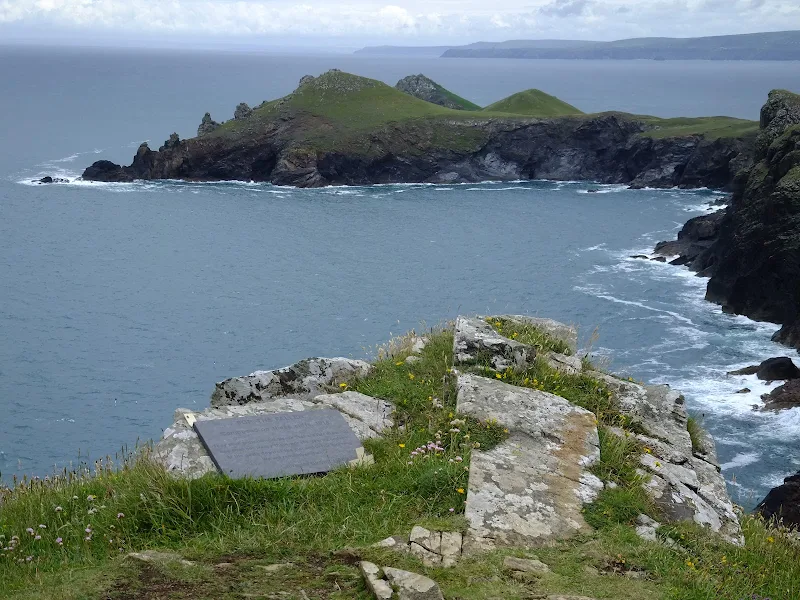
South West Coast Path - Lands End to Mousehole

Enys Dodnan

An arduous but rewarding 13 mile walk along the South West Coast Path between Lands End and Mousehole

This is an arduous section of the coast path but is nonetheless worthwhile for its spectacular scenery and rugged landscape. There is little in the way of civilisation throughout the entire route but the views and amazing with the natural wonders of the Longships rocks, Gwennap Head, Logans Rock and so much more.

Thursday, 10 January 2019

South West Coast Path - Hartland to Bude

Screda Cove

An 19 mile walk along the South West Coast Path between Hartland to Bude

The section from Hartland to Bude is the most challenging part of the whole South West Coast Path. There are ten deep valleys to cross which seem unrelenting but the reward is some of the most spectacular scenery of the whole trail. This is definitely something for the more experienced hiker to undertake.

Wednesday, 18 December 2019

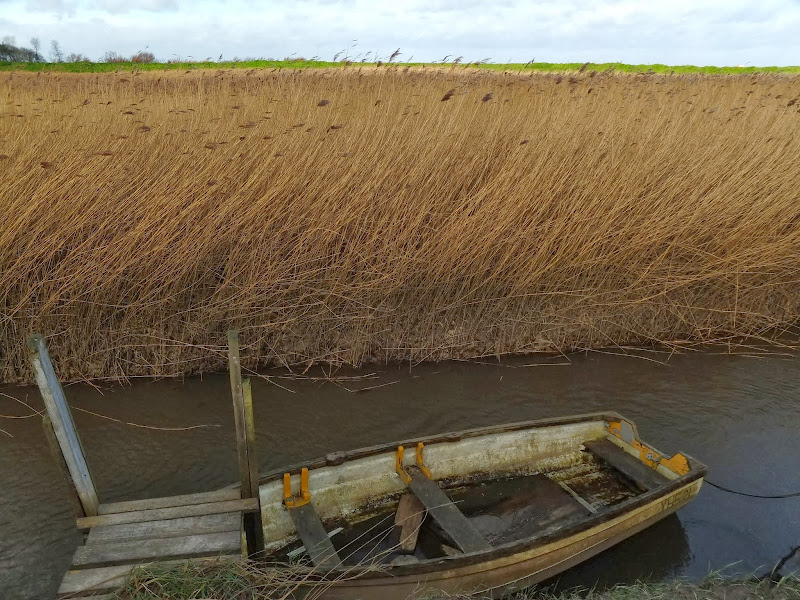
Lincolnshire Coast Path - Cleethorpes to Mablethorpe

North Coates Marshes

A 23 mile walk along the Lincolnshire Coast between Cleethorpes and Mablethorpe

Although a Lincolnshire Coast Path has yet to be established, this walk sets out a viable route for all budding coast walkers. This follows defence banks and permissive paths with a little road walking where necessary.

Monday, 26 April 2021

South West Coast Path - Swanage to South Haven Point

Old Harry's Rocks

An moderately easy walk to the end of the South West Coast Path at South Haven Point

Old Harry Rocks is the highlight of this walk, and the ascent to Handfast Point, off of which the rocks are located, is the only real effort that has to be expended during the duration of this walk.The rest of the walk is easy all the way through to the end of the South West Coast Path at South Haven Point.

Wednesday, 18 December 2019

The Aftermath of the 2013 Storm Surge - Blakeney, Cley and Salthouse

Salthouse marshes

A 4 mile beach walk to witness the damage caused by the 2013 Storm Surge along the shingle bank between Cley and Salthouse

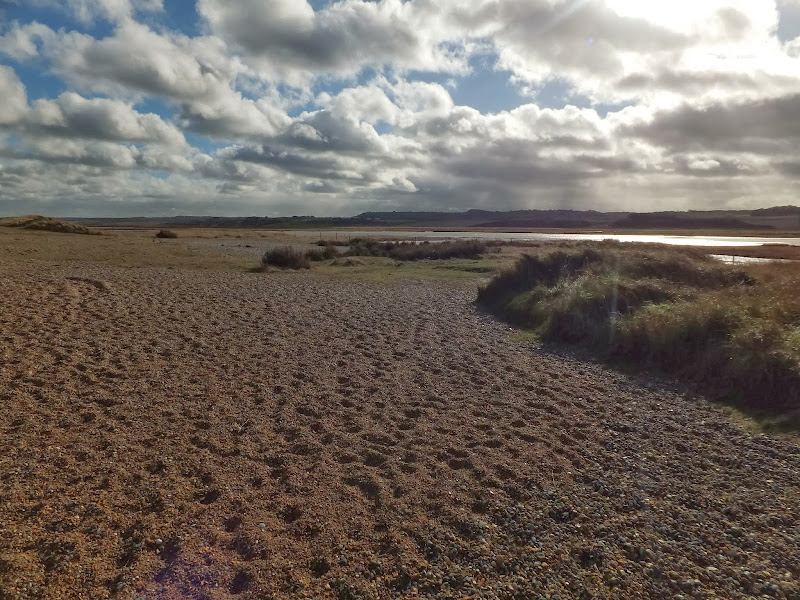
The December 2013 Storm Surge caused widespread flooding of the marshes and sea defences along the North Norfolk Coast, resulting in the closure of the Coast path between Blakeney and Cley. It is still possible to walk out to the beach from Cley village via the road where a walk along the shingle will astound those who have walked this section prior to the December storm. The shingle ridge has been levelled, with the excess cast across the marshes.

Cley to Salthouse Beach Walk - Essential Information

Walk Statistics:

  • Start location: Cley 
  • End location: Salthouse 
  • Distance:   miles (  km)
  • Total Gain:   ft (  metre)
  • Total Descent:   ft (  metre)
  • Min Height:   ft (  metre)
  • Max Height:   ft (  metre)
  • Walk Time:  
  • Walk type: Linear
  • Walk Grade: Heavy going across shingle
  • Terrain: Road to and from the beach, shingle beach throughout

Maps:

The following maps and services can assist in navigating this route. There are links to printed maps and links to downloadable GPX route data for importing into navigational software and apps.


Accommodation:

Cambridge House Bed and BreakfastView in OS Map | View in Google Map
Website
Description
Friendly family run sea front guest house next to the Red Lion in Cromer

Transport:

Details of public transport that is required for the walk

Various Operators - Bus Service
Service Details
Coasthopper CH1, CH2, CH3 - Unfortunately, in recent years the highly acclaimed Coasthopper bus service has suffered from subsequent takeovers with a consequent deterioration of the service and continuing doubts upon is viability. Due to its constant changing operators, it is therefore best to use the Traveline website to determine the current timetables and services.
Timetable

Route Verification Details

  • Date of Walk: 2014-02-15
  • Walk Time: 10:30 to 12:30
  • Walkers: Griffmonster, Kat
  • Weather Conditions: Strong to gale force westerly winds with a rapidly moving cl0udscape

Walk Notes

The intention of the days outing was to visit some key areas that had suffered under the December Storm Surge. The intention of this walk was to include Blakeney, Cley and Salthouse, however the path from Blakeney to Cley is closed due to multiple breaches of the sea defences as a result of the surge. The defences from Cley up to the beach have also been breached resulting in the closure of this section of coast path. At least there is a viable alternative at Cley using the beach road, whereas the alternative between Blakeney to Cley is the main Coast Road which is not a recommended walk due to the lack of pavement and the busy nature of this well used coastal route. There is one other alternative route via Wiveton Downs and Glandford. Although this offers some spectacular views it is not really a coast path - this route will be covered in a posting on this site in the near future. Therefore on this particular day of heavy showers and gale force westerly winds Blakeney was reached using the Coasthopper service.

So, in cardinal order of west to east, here is a description of the damage encountered. Firstly Blakeney where the Norfolk Coast Partnership lists the storm surge damage as:

Blakeney Freshes was totally inundated with seawater (c. 157 ha, to a depth of 1 - 2+ metres). There are numerous breaches in the sea wall (total c. 500 metres), some of which are at saltmarsh level so that monthly high water spring tides will put more water onto this area. Water is being evacuated from the Freshes through the one functioning sluice, so the water level has dropped a little in 5 days.

At the time of the surge the media was full of pictures displaying a boat marooned on top of the quay after the floods had receded. This has now been removed and appears to be the same cruiser which languishes in a forlorn state against the sea defence adjacent to the first breach. The rusting hull has several notices taped to it, these are orders for removal. Obviously no-one has claimed the boat. There is no indication of where it came from and it may well have been torn from its mooring and been brought in on the flood tide leaving the owners lost as to its current whereabouts.

A little closer to the harbour is a Wayfarer dinghy sitting atop of the defences and blocking the coast path. This was obviously deposited here by the tide. Not that there is any point to continuing along the coast path with the breach by the cruiser being a full 20 yards in length and beyond that a fence denying access further along the path. Reports from the Environment Agency and Norfolk Council website attest to there being multiple breaches along this path through to Cley. The EA are currently assessing the damage and they have stated that the repair would be both costly and challenging. Therefore the agency is consulting environmental bodies and the people of Blakeney on the future of protecting the Freshes marsh and hence the reinstatement of the coast path. It would be a very sad loss to have this section of coast path permanently closed as it is an excellent example of the landscape that is typical of the Norfolk Coast Path and one which I have personally walked on many occasions and found a real pleasure in doing so.

I do get the impression that the abandonment of the marsh to the sea is something which the residents are firmly against. The marshes and the coast path are the reason for visitors coming to the village. As the landlord of the Kings Head in Blakeney was heard to say whilst we dropped in for a pint, "if there is no coast path or marsh then why would anyone want to visit". It was interesting to listen to this man who experienced the flood first hand. Although he was not specifically speaking with us, he was nonetheless relating the stories to another couple. He depicted the level of the water in the bar then emphasized that the level dropped a full ten inches when the waters first breached the defences and flooded into the marsh.

Moving onto Cley, once again the Norfolk Coast Partnership has listed the details of the damage:

  • Two major breaches in the shingle bank, at Salthouse (400m west of Little Eye) and Pope’s Marsh (east end of Sea Pool).
  • Extensive wash-back of shingle, up to 100m onto marshes.
  • Beach car park covered in shingle, other car parks extensive debris.
  • North Hide washed away, other hides damaged or inaccessible due to boardwalk damage.
  • Extensive stretches of boardwalk damaged.
  • Extensive areas of fencing lost, damaged or buried under shingle.
  • Several bridges damaged or washed away.

Despite starting out on the coast path past Cley windmill, progress is soon hampered by a fence blocking the way with a typed notice to declare the path closed due to breaches caused by the storm surge. In reality much of this has already been repaired and some walkers were seen to have clambered up the defence bank beside the beach road to walk along it. Hopefully this will be officially reopened in the near future as, although the road is not particularly busy, it is nonetheless single track and one has to constantly make way for passing vehicles.

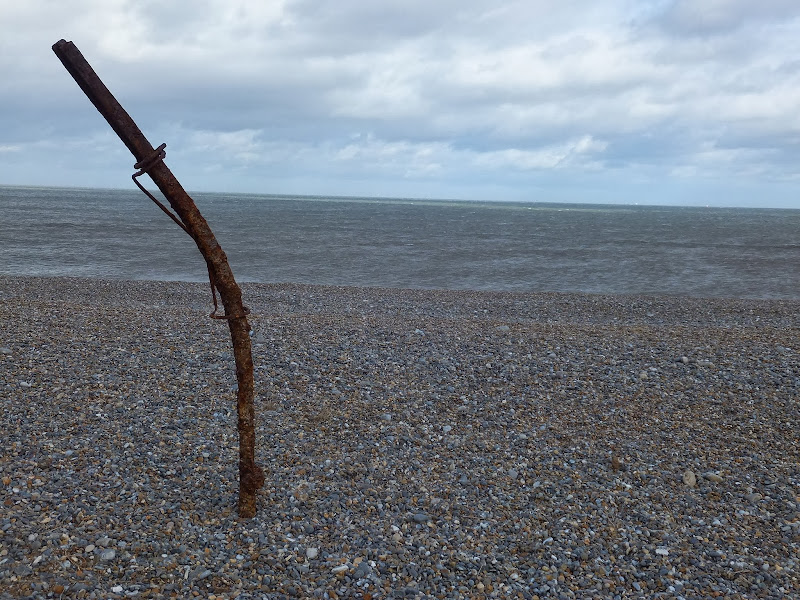
Cley beach gave a sample of the damage along this section of coast. The shingle that typifies this length of the coast path has shifted to such an extent that it was unrecognisable. The Cley beach car park was covered in deep shingle. The square shelter where I have taken rests on its seats on previous occasions was half buried in shingle. The old WWII pillbox is nearly underneath the shingle. Shingle has been swept across the marsh. The shingle ridge that defended the marshes is now flattened all the way through to Salthouse car park. This really has changed drastically since our last visit. There was even a section of coastline on the beach side where the shingle had eroded to the sandy structures that lie beneath, with assorted debris strewn across the beach at this point. Sections of brick wall. Large stones and chunks of concrete which gave a moonscape appearance. Further along, and throughout the distance to Salthouse were numerous metal rails sticking vertically out of the shingle. Eroded with rust. Encrusted in stony crustaceans. They line in regular procession along what used to be the height of the ridge. At a guess these are probably old WWII defences but this needs verifying.

It was along this stretch of shingle that the USAF Helicopter crashed in January 2014. There are no reminders left of this tragic accident other than some of the metal defences cut down into a pile of debris which may have been done to gain access to the area it came down.

There are a couple of areas where major breaches left a flow of water between sea and marsh. These are evident from the banks that have formed either side of where the water flowed. Although the natural tide action has now sealed these breaches no doubt future breaches will be seen at these points. Local media has recently stated that this is part of a natural healing process with the sea rebuilding the shingle ridge. I personally think this is rather optimistic as the same process occurs along the Suffolk broads at Easton, Covehithe and Benacre. Storms regularly breach across the beach forming channels of water and then calmer weather results in the tide repairing the breach but there is never a build up of a ridge to provide a lasting seal.

The beach car park at Salthouse is unrecognisable. The only give away that it was the car park is the post that contained the emergency telephone. This eight feet high post had a yellow emergency telephone at chest level and was topped with a clear notice. All that is now visible of this is the sign at the top with the rest buried beneath the shingle, giving a clear indication of the depth of the shingle that has swept across the car park.

Coasthopper Bus Service

One last point on a different subject is the changes to the Coasthopper bus service. This has been a successful, well used service for both locals and visitors to North Norfolk, providing an easy method to navigate to the various destinations along the coast path for sectional walkers. The service provides a link between Cromer, Hunstanton and Kings Lynn, half hourly in summer and hourly in winter and has a dedicated crew of drivers who are friendly, helpful and at times entertaining, providing local information and even poetry recitals. The buses can be flagged down at any point and the driver will stop if safe to do so. It has always been one of the reasons for returning to the Norfolk Coast Path in my humble opinion.

However, the service has been running at a substantial loss and Norfolk Council are cutting back on providing the shortfall. As stated, the service is successful in the number of passengers it caters for but the major problem has been that the majority of these passengers are bus pass holders and, certainly during summer months, are taking advantage with lengthy journeys for which the company are only reimbursed with the standard flat fare. Whether a bus pass passenger travels one mile or sixty, the bus company only receives a sum of, I believe, a little over one pound. This is where the loss is being made as on most journeys the fare paying passenger is very much in the minority. One driver stated that they are legally obliged to take bus pass users and the only way around this is to make the service into a pre-booked service which would totally defeat its purpose.

In the winter of 2014 Stagecoach took over Norfolk Green who has been providing the Coasthopper service for many years and there has already been a noticeable change in the service and its costs. It has always been a series of three separate services, namely CH1, Kings Lynn to Hunstanton, CH2, Hunstanton to Wells and CH3, Wells to Cromer, although effectively the buses using the route would just change their service number as they went along resulting in a continuous and seamless journey with no connections to be met.

The service now appears to have fragmented so one now needs to change buses at Wells in order to continue the journey. I suspect this has been implemented so that bus pass passengers then need to obtain a second ticket for their onward journey and the company then gets a reimbursement for both parts of the journey. Normal through tickets are still available for fare paying passengers but there are no guaranteed connections. I cant blame the company for adopting this policy when they are effectively giving free rides, as they cannot run at a loss forever. However, I do feel that the whole idea of offering free bus passes has not been thought through properly and the Government really needs to either address the abuse of the system or provide the appropriate funding to compensate the companies that are having to provide the service. There have been petitions against this, notably from Norfolk Council who has to provide the refunds but the Government has turned a deaf ear to these objections. There is also a petition to save the coasthopper which I would ask for all who are concerned to sign

There has also been a large increase in the fares to help fund the bus pass passengers. I don't resent those with bus passes from taking advantage but I do resent the mess that the bus pass policy has resulted in. Even so, a day pass now costs £9.00 and gives access to all the Coasthopper services along the route. That isn't bad for a day out.

Whilst writing this article Stagecoach managing director, Andrew Dyer, was quoted as saying that he was confident the summer timetable would run, but that the position was not definite for the winter season. I just hope this service continues to operate as it has always done. It would be a very sad loss if it is discontinued and I am sure a lot of businesses along the route will suffer from the lack of visitors.

The service was subsequently passed on to two companies, Sanders and Lynx. Its future is uncertain

Major breach looking towards Salthouse village

Directions

Beach walk between Cley and Salthouse

The Coast Path is currently closed between Blakeney and Cley.

The Coast Path follows the defence banks out of Cley village and down to the beach. This has currently been closed due to breaches in the bank which involves a diversion to the beach road. Follow the shingle beach through to Sathouse beach car park where a track leads back to the eastern side of the village. The car park is currently under several feet of shingle and is unusable.

Abandoned cruiser with a removal notice served  upon it at Blakeney
Abandoned cruiser with a removal notice served upon it at Blakeney

Features

Salthouse MarshesView in OS Map | View in Google Map

The Salthouse and Cley marshes have been bordered by a shingle beach for centuries although this has been slowly moving landwards over that time. It has been estimated that a quarter of a mile of marsh has been lost to the constant erosion since the 1500's. There used to be a navigable channel that linked Salthouse to Blakeney harbour, whose course went around the north side of the Cley enclosure but this was sealed by the shingle during a violent storm in 1845.

During the early 1850's a Clay defence bank was constructed along the edge of the marsh and behind the shingle ridge to prevent the marshes being inundated of the sea. It location was not well thought through with water being trapped between the bank and the shingle resulting in frequent breaches and eventually resulting in the sea reclaiming the marsh by 1861. Despite a new cut being built to drain the marsh this silted up and another flood in 1921 resulted in the area becoming an inland sea dotted with small islands which was locally known as the Salthouse Broads.

In modern times the shingle ridge has been maintained as a sea defence, with breaches being repaired. This has been an expensive exercise and has more recently given way to a managed retreat under the assumption of the marsh itself becoming the defence in much the same way as exists along other areas of the North Norfolk Coast. The area is managed as a nature reserve by the Norfolk Wildlife Trust and is of international importance for its wildlife, particularly birds.

References
Beach view to Sheringham

Gallery

Below are a selection of images taken from from the photo album for this walk. Feel free to browse through these or click on an image to view a larger version in the Gallery.

Summary of Document Changes

Last Updated: 2021-12-07

2014-02-24 : original publication
2019-12-18 : general maintenance updates
2021-03-17 : Update website improvements and removal of ViewRanger reliance
2021-12-01 : Removal of ViewRanger links due to its imminent demise

Indexes and Info

East Suffolk PRoW Access

The Public Rights of Way (PRoW) within the Suffolk Coastal area between Aldeburgh and Southwold are subject to being blocked up and diverted due to the extensive industrial projects that are currently taking place in the area including the Sizewell C development and various wind farm projects. A PRoW Access page details known issues in the area. There is also a link to the Works Tracker that contains details of known Blocking Up and Diversion Orders

Featured Walk

In Search of Sizewell Chapel

A 10 mile walk following the southern side of the parish boundary of Leiston in Suffolk This walk follows the route of a 17th century peram...

What is GPX

All you need to know about GPX, electronic mapping and how to use modern apps and mobile devices as navigation devices

Popular Walks

Diary of a Suffolk Common

The ramblings and musing of the Griffmonster