Route details, maps, pubs, features, local history and folklore for a wide variety of walks focusing primarily on Norfolk and Suffolk

find_in_page

Keyword Search Results

Walks
Showing posts sorted by relevance for query Dunwich. Sort by date Show all posts

In Search of the Lost City of Dunwich (Diversion in Place)

A circular walk between Leiston and Dunwich

This walk uses the beach and the Sandlings Path to provide a days walk to Dunwich from Leiston via Sizewell. One should time this walk such that the beach is walked a couple of hours either side of low tide when there is a little sand to walk along. At other times the beach is predominantly shingle and the walker may find it easier to follow the Suffolk Coast Path which is waymarked from the north side of Minsmere where it continues up onto the cliffs.

In search of the lost Suffolk village of Hethern

Westwood Lodge with what is thought to be the old track leading down to the marsh

A 5 mile walk through Dunwich forest to the medieval site of the lost village of Hethern.

Dunwich forest is always a good place to walk and find peace amid the fora, fauna and wildlife. There are information boards that provide details of this ever changing world of nature but there is nothing about its history. Little is known of the medieval village of Hethern or the landmarks of Stonehill Bridge and Stonehill Castle which are recorded in the 15th century Westleton Extents. This document records that they stood aside a now lost road directly linking Dunwich to Blythburgh and which cut across the marshes.
A Trek Around Sole Bay

Sole Bay

A 24 mile circular walk between Sizewell and Southwold along the Suffolk Coast Path and Sandlings Walk.

Back in the 17th Century, Southwold was England's main fleet anchorage. Sole Bay (Sawolde Bay) was a bay centred on Southwold with Easton Ness to the North and Dunwich to the South. In May 1672 this bay was the scene of a fierce sea battle when a fleet of 75 Dutch ships took an Anglo-French fleet by surprise. There were heavy losses on both sides in this, the first naval battle of the third Anglo Dutch War, but luckily for the English fleet the wind turned to their favour resulting in their success in the battle. Today coastal erosion has straightened the coastline of the former bay and all that remains of the battle are the stories and the cannons pointing out to sea on Gun Hill.

Leiston to Westwood Marsh

The old Westwood Marsh Pumping Mill

A walk encompassing the Westwood Marshes footpath into a circular route from Leiston

The Westwood Marshes footpath is little gem of a path that links the Newdelight Walks with the Suffolk Coast Path through the Westwood marshes. The route for this walk uses this path as the ultimate destination from Leiston but shorter alternatives to include this path are also detailed.

The Sandlings Walk - Dunwich to Southwold

Aldborough

A 15 mile circular walk along the Sandlings footpath between Dunwich and Southwold, with an option of returning either via the beach or the Suffolk Coast Path through Dingle Marshes

This is the final stage of the Sandlings Walk from Ipswich to Southwold. Starting at Dunwich, it takes the trails through Dunwich Forest and heads over Walberswick Heath to Southwold. The woods are full of mushrooms and nuts and berries this time of year... and hops! This is a lovely walk through the woods and well worth the effort. To make the route circular, the return is either via Dingle Marshes, or the Suffolk Coast Path or if the tide is out then its an easy walk along the beach.

The Sandlings Walk

The Sandlings Waymarker

An overview of the Sandlings Walk, a 55 mile long distance path through the forests and heaths of East Suffolk

The Sandlings is a 55 mile walk starting at Rushmere Heath on the eastern side of Ipswich with Southwold, passing through the remaining fragments of East Suffolks Sandling Heaths. The trail leads through Rendlesham, Tunstall and Dunwich forests and also includes riverside walks at Woodbridge and heathland walks across Rushmere Heath, Sutton Heath, Thorpeness Common and Dunwich Heath..

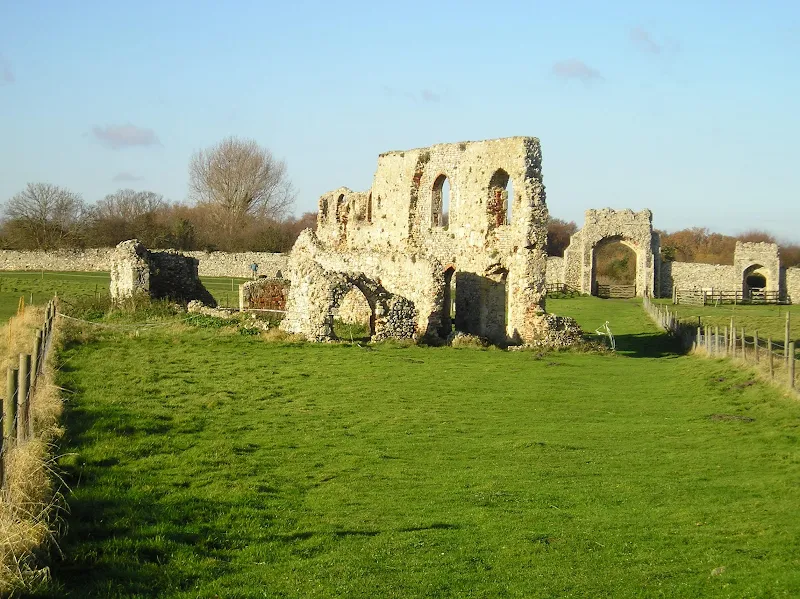
A Walk to the Dunwich Leper Chapel (Diversion in Place)

Leper Chapel

A 14.25 mile circular walk between Leiston to Dunwich

A simple walk using the Suffolk Coast Path from Sizewell to Dunwich with a visit to the ruins of the 12th century Leper Chapel. The return uses the the footpath via Mount Pleasant to get onto the Sandlings Path across Dunwich Heath to return back to Leiston.

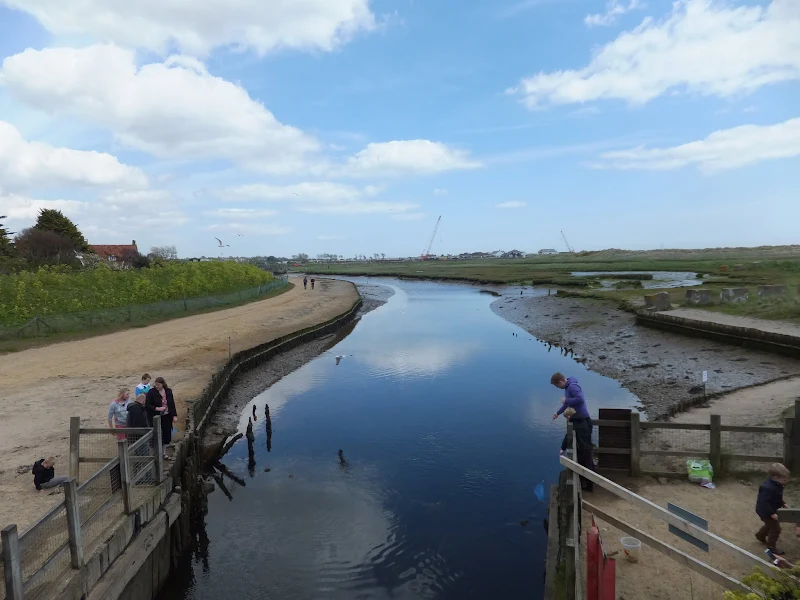
Leiston to Walberswick Circular Walk

Sole Bay

A 22 mile circular walk between Leiston and Walberswick incorporating sections of the Suffolk Coast Path and Sandlings Walk.

This walk uses the beach at low tide to get from Sizewell to Walberswick, returning through Dunwich forest. Walberswick is said to be the most haunted place in Britain though one would not think it from its relaxed and laid back character, famous for its crabbing pastimes.

The Aftermath of the 2013 Storm Surge Dunwich to Walberswick

Flattened dunes by the Northern Sea Wall to Minsmere

A 10 mile circular walk to witness the damage caused by the 2013 Storm Surge

The 2013 Storm Surge proved to be the highest tide in 60 years. Although much of the flooding had recede the evidence remained of where the waters reached. Viewing the changes in coastline shows just how vulnerable this stretch of the Suffolk coast really is, especially in view of the fact that such storms appear to be increasing in frequency. The walk returns through the heath and forest via Dunwich Heath and Eastbridge where the results of Octobers St Jude storm are evident from the many fallen trees.

The Aftermath of the 2013 Storm Surge at Minsmere

Flattened dunes by the Northern Sea Wall to Minsmere

A 10 mile circular walk to witness the damage caused by the 2013 Storm Surge

The 2013 Storm Surge proved to be the highest tide in 60 years. Although much of the flooding had recede the evidence remained of where the waters reached. Viewing the changes in coastline shows just how vulnerable this stretch of the Suffolk coast really is, especially in view of the fact that such storms appear to be increasing in frequency. The walk returns through the heath and forest via Dunwich Heath and Eastbridge where the results of Octobers St Jude storm are evident from the many fallen trees.

Suffolk Coast Path

Martello Tower at Bawdsey

An overview of the Suffolk Coast Path, a 60 mile long distance path following the coast of Suffolk

A 60 mile long distance footpath from Felixstowe to Lowestoft in easy stages through some of the characteristic landscapes of the Suffolk Coast and Heaths Area of Outstanding Natural Beauty. The path also includes the Orford Loop which provides access through to Orford and the Butley Ferry. Alternative beach walks, providing the tide is right, can be undertaken throughout.

Dunwich to Walberswick

Aldborough

A 13 mile Suffolk circular walk connecting Dunwich and Walberswick

This walk encapsulates coast, forest and marsh presenting a myriad of landscapes. Making use of both the Sandlings and Suffolk Coast Path, it is a simple and easily navigated wander to fill a days exploration

A Walk around Suffolk's Minsmere Bird Reserve

Minsmere sluice

A 10 mile circular walk through the Suffolk Coastal Area of Outstanding Natural Beauty taking in Sizewell and the Minsmere Bird Reserve

One does not have to have an enthusiasm for ornithology to enjoy this walk. The natural surroundings of marshland and heathland are enough to inspire everyone and there is a lot of associated history along this route which dates back to the 12th century when Leiston Abbey once occupied an island in the marshes. Note that charges apply to the Minsmere section.

A Walk through the Woods on Kenton and Goose Hills - BLOCKED UP

Goose Hill

An easy 7 mile circular walk through the woodland around Sizewell on the Suffolk Coast

Suffolk is not best known for its hills and Kenton Hill and Goose Hill probably would not be regarded as hills but for their name. However this wooded area offers an ever changing scenery throughout the year with the mixture of conifer and broad leafed trees, flora and fauna and a variety of wildlife. There is also a viewing platform overlooking the Minsmere marshes

Coastal Erosion at Thorpeness

Erosion at Thorpeness

A circular walk from Sizewell to Thorpeness along the Suffolk Coast Path

In recent years the Suffolk Coast Path has been rerouted in-land from Sizewell across the commons to Thorpeness due to coastal erosion. The old coast route can still be walked when the tide is right and there is always an escape up the cliffs to Thorpeness Common just before the Thorpeness cliffs where the tide cuts off access to the beach.

In Search of Sizewell Chapel

Broom Covert

A 10 mile walk following the southern side of the parish boundary of Leiston in Suffolk

This walk follows the route of a 17th century perambulation around the southern side of the Leiston Parish boundary. The walk uses the ancient track down to Sizewell and continues down to Thorpe before turning inland to follow the River Hundred through to Cold Fair Green. The details are contained in two articles, this being the first, focusing on the medieval history of Sizewell.

Tales of Sundials, Witchcraft and Ghostly happenings in Saxmundham

A 2 mile circular walk around the Suffolk town of Saxmundham using the Town Trail

A simple tour of Saxmundham that can be added onto the East Suffolk Line Walks or to while away a couple of hours on a lazy afternoon, including searching out the unique tombstone sundial in St Johns churchyard, and finding the haunted Monks Cottages.

Tales of witchcraft, sundials and ghostly happenings in Saxmundham - Essential Information

Walk Statistics:

  • Start location: Saxmundham 
  • Distance:   miles (  km)
  • Total Gain:   ft (  metre)
  • Total Descent:   ft (  metre)
  • Min Height:   ft (  metre)
  • Max Height:   ft (  metre)
  • Walk Time:  
  • Walk type: Circular
  • Walk Grade: Easy
  • Terrain:

Maps:

The following maps and services can assist in navigating this route. There are links to printed maps and links to downloadable GPX route data for importing into navigational software and apps.


Route Verification Details

  • Date of Walk: 2012-02-11
  • Walk Time: 08:30 to 10:30
  • Walkers: Griffmonster, Kat
  • Weather Conditions: Cold but sunny winters day

Walk Notes

This walk was the result of being told about a gravestone in the churchyard at Saxmundham that had a working sundial designed into its stone. Having failed to locate this unique artefact on a previous visit, I was all the more resolute on finding it on this occasion. So, after wandering around the town trail musing over the railway, the old mill, the Monks Cottages and the River Fromus we arrived at the church. There is a block of graves to the south west but nothing obvious at first sight. On closer inspection the grave eventually revealed itself and what a wonder this simple yet effective tool is. Although the low sun was not strong enough to cast a shadow on this winters day, the simplicity of how this should work was obvious. A rectangular section with a semi-circular bottom graduated into hours and a shadow cast by the edge of the rectangle. A true wonder. Read more about this below in the walk features.

Although there is no firm evidence it is thought that Saxmundham takes its name from a Saxon thegn (a Saxon lord) named Seismund. There are references to the manor of Saxmundham in the Domesday Book of 1086 and in 1272 Henry III awarded a charter to John de Rammseye for Saxmundham to hold a market.

Saxmundham used to have plenty of pubs including the 16th century Angel Inn, closed in 1977 and now marked with a plaque above its door, plus also retaining its notable crinkle-crankle wall at the rear, the Railway (closed 2009) and the Coopers Dip (closed 2011). Sadly the last pub left in the town, the 17th century White Hart, closed its doors at the start of 2012. This is a sad reflection of the times we live in with pubs unable to compete with the cheap discounted booze available in supermarkets and the British Government appearing to be bent on a crusade against the demon drink and pubs in general. During the past few years the number of pubs around this part of Suffolk that have closed down is staggering. Not only we, the British public, are losing a place for refreshment and social interaction but we are also losing some of what can only be described as historic public buildings. It is so sad that many of these old inns and taverns dating from the middle ages will end up as private dwellings and we will never be able to sit and admire them from within. There is no doubt about it that we ARE losing our heritage. Having got off my soap-box, I must admit that the Coopers Dip and the Railway were not the most salubrious of establishments towards the end of their public lives. I speak from personal experience of having to attend Sunday evening pool games at both of these pubs where we had to dodge the frequent brawls and foul language, but this cannot be blamed solely upon the drink but also upon the management of such premises who allow these reprobates to drink too much. Today, there is just one bar left in the town, that at the Bell Hotel, but I have been reliably informed that this now only accepts custom from residents. What a sad state of affairs it is when a town the size of Saxmundham boasts no pubs at all.

For this posting I don't want to dwell upon the historic features around the walk as these are all well covered on the trail pages to the town website (http://www.saxmundham.org/touristinfo/towntrail.html) and I would merely be repeating the same facts. So please refer to this for a little history and information about the Railway Station, the old post-mill, the towns old buildings, the parish church of St John, and the town museum. Instead, for this post, I will concentrate on the walks aim, which was to find the gravestone sundial and also recount a tale from Saxmundham that was published in a variety of publications during the 19th century. As a finale there is a little ghost story from the Monks cottages. With these anecdotes, take a wander around this little town and as you peruse the physical remains of the history of Sax, also ponder over the local tales, the folklore that gives the physical history something of a soul. All of these investigations acan be found in the Features below.

Market Hall
Market Hall

Directions

A simple trail around the town of Saxmundham

Head to the railway station which is pretty much in the town centre. From here, continue across the railway line and up Albion Street until it bends to the right and junctions with Rendham Road. Turn left past the post-mill then left into Mill Road. Continue down the road, over the railway crossing and then turn right at the cross roads into South Entrance. Walk past the town sign next to Chantry House and up to the last housing in town which is Monks Cottages. Cross the road and return back into town then turn right at the crossroads past the supermarket car park, over the river bridge and up into St Johns churchyard. Return back down towards the town and cross the Waitrose car park and cut through into Fromus Square and back out onto the main street. Turn right and if you continue about a quarter of a mile beyond Brook Farm Road there is the entrance to Carlton Hall. Return back into town along North Entrance and under the railway bridge then bearing right in front of the old Angel pub to get back to the railway station.

Gravestone showing the distinctive rectangular sundialThe sundial clearly showing the hour markings
On the left Gravestone showing the distinctive rectangular sundial; On the right The sundial clearly showing the hour markings

Features

Saxmundham Tombstone with Integral SundialView in OS Map | View in Google Map

There is no recorded documentation as to why the grave of John Nollar that stands on the south west corner of St Johns churchyard, has a carved sundial contained within its stone. We do know that John Nollar was born in Rendham in 1667 to Thomas and Anne Nollar. He married Mary, born in 1670 but whose origins are unknown, and together they had 5 children, John, Mary, Thomas, Joseph and Anne. Mary passed away on 13th March 1724 followed by Johns passing on 1 August 1725 and they were both buried in St Johns churchyard and marked with a single headstone with the inscription . "The Remains of John Nollar Snr. and Mary his wife whose soul took flight John Nollars 1st August 1725 aged 58 years and Mary Nollar his wife...." after which the remaining inscription is concealed by the earth and grass.

The headstone faces an east west orientation along with the rest of the stones on that section of the churchyard. On each side of the stone there is a 3 inch rectangular recess that forms a half cylinder and is essentially a sundial. The recesses are on a slant to the vertical so that they point to the north star and are thus parallel to the earth's axis. Within the recesses are lined parallel graduations with the numbers 1, 2, 3, 4 and 5 on the west side and 7, 8, 9, 10 and 11 on the east side. The beauty about the design of this sundial is that it lacks a gnomon, the pointer that casts the shadow. Whoever designed this sundial came up with an ingenious solution which makes the edge of the recess the gnomon and this casts its shadow down into the recess with midday not marked as both recesses will be in shadow.

The sundial is said to be extremely accurate but the designer has no credit and the reason for its inclusion not revealed. Nonetheless this is a most remarkable and ingenious piece of handiwork that is well worth seeking out.

The Strange Tale of Magdalen HolydayView in OS Map | View in Google Map

Magdalen Holyday was the eighteen year old daughter of Rendham couple Phineas and Martha Holyday and was a live-in servant-maid to Mr. Simon Jones, minister of Saxmundham. She had been in his employ for three years when this tale came about and had earned a reputation of being a well behaved and decent young lady, civil in her speech and dutiful in her religion. She had been brought up as a loyal subject to the king and had renounced the likes of Oliver Cromwell and all what he stood for.

This tale starts in the year of 1672, on a day known as Lammas, the festival of the wheat harvest, August 1. This particular year it occurred on a Monday and at noon of that day, as expected, she was serving dinner to the parson, his wife and their daughter Rebecca who at the time was about to be married to a gospel minister from Yoxford. As Magdalen placed a suet dumpling down on a plate, she let out a loud shriek and stooped down in pain complaining that she had felt a sting on her upper leg as if a pin had pierced it. When she investigated she could see and feel a pin just under the surface of her skin but there was no break in the tissue for it to have gotten there. The pain was unrelenting and from this point on tormented her both day and night.

In these bygone days Suffolk was renowned for the number of witches who practised in the black arts and Magdalen had soon connected the fact that only a few days previous to her affliction she had denied an old crone who had come to the door of the house and begged a pin. This, she had assumed, was the repayment for her actions, a hex brought about by the witch she had denied.

It wasn't many days before the ministers wife, concerned for Magdalens welfare, sent for the assistance of two local doctors, both of high repute and well experienced in their professions. Despite their qualifications neither was able to detect or trace any evidence of a pin within Magdalens leg. She insisted that the pin was there but had worked itself deeper into her skin. As was the custom of those days, the doctors prescribed leeches to draw the blood but to no avail. The minister, meanwhile, offered his godly prayers and rang the church bells to try to chase the demons away but Magdalen's pains continued unabated, getting worse, now giving her dreams and apparitions at night. Sometimes she would see a creature resembling a mole scurrying into her bed, sometimes a terrorizing naked arm grasped across her body as she lay in bed.

Eventually, after much discussion, the doctors took her to the Baronet Sir John Rouse of Henham, a Member of Parliament for Dunwich and Eye and upon his jurisdiction they gave her a concoction consisting of southernwood, an antiseptic plant with a strong camphor-like odour, mugwort, commonly known as wormwood and vervain. This she was then required to drink. They also anointed her leg with an ointment made from four ounces of Dog's grease mixed with two ounces of bear's fat, eight ounces of capon's grease, 24 slips of mistletoe, cut in pieces and powdered with gum of Venice turpentine. This mixture was mixed and left in a phial exposed to the sun for nine days until it formed a green balsam. She was then required to rub this into her skin daily for three weeks.

She carried out the prescription as required but her ailments became worse, causing constant sickness during which she vomited a variety of items including parings of nails, bits of spoons, triangular pieces of brass, crooked pins, bodkins, lumps of red hair, broken egg-shells, parchment shavings, a hen's leg bone, 1200 worms, pieces of glass, bones resembling the great teeth of a horse, some unidentified luminous matter and sal petri (this is the name for nitrate of potash, a salt which produces dreadful effects when largely taken). After all this, as the medical practitioners were giving up hope she brought up with a violent retching, a whole row of pins stuck on blew paper.

After this the vomiting ceased and she began to recover. Naturally the Doctors perceived that it was their potent drugs that had been the cure. But who knows, maybe it was the witches curse, how else did so many and varied amount of items manage to get lodged into her stomach to be vomited up. Magdalen went on to live a happy life, her afflictions never to return. She married an honest but poor man who was the steward to Sir John Heveninghara to whom she bore four healthy children.

References

A Spooky Tale from the Monks CottagesView in OS Map | View in Google Map

On the South Entrance to Saxmundham, as the road leaves the town, on the right hand side on the road, there are a group of cottages with a plaque high up on the wall declaring them to be Monks Cottages. At one time, during the 1600's these used to be a part of a very large and grand manor house. Prior to this, in the 14th century, the site housed several chapels known as chantries. Before we go into further detail, it is vital to know that during the middle-ages there was a general belief that after death the soul passed into purgatory, which was a place of temporary punishment where the soul is made ready for Heaven. Prayers for the deceased would assist and promote their passage and purification within purgatory and funds known as a chantries were set up which would be used to pay for a priest to lodge petition in prayer once the benefactor had died. The Chantry Chapel was the name for a designated area, usually within a church, that was used for the chantry duties of the priests, the place the priests would recite their prayers and chant their masses for those who had passed on.

In the year 2000, one of the cottages was occupied by a Doreen Pelletier. She had lived there for 13 years when she decided to clear out the cellar which had been littered with rubble since she first moved into the house 13 years previous. For the job she hired a group of builders, but soon after they had started to dig around in the cellar, the electric light went and switched itself off. This was the start of many spooky happenings which eventually resulted in the builders quitting the job, declaring the place to be haunted and suggesting that Doreen get an exorcist in.

Doing a little research Doreen learned that the previous owners had their own spooky experiences in the cottage. The lady of the house had encountered a ghostly figure on the stairs and eventually, after many other strange happenings within the cottage, the owners called in an exorcist. Knowing this, Doreen covered the cellar with a trap door and then called in BBC2's House Detective team, a series dedicated to investigating the secret histories of houses, to help solve the mystery. She was initially asked to take photographs for the programme but when she pulled up the trap door and tried to take a picture, the camera jammed and then mysteriously rewound itself.

The Series two presenters historian Dan Cruickshank and antiques specialist Judith Miller soon discovered from local records that Doreen's home had indeed been built on the site of one of these 'chantry's'. And after clearing her cellar, it was obvious that was what it had been - complete with shelves for candles. The episode was originally screened on BBC2 in 2002 but unfortunately I have not been able to locate a youtube version of this and therefore the outcome of the investigation is unknown. The only conclusion from the references found was that after the visit from the House Detectives, things quietened down. But who knows. Maybe whilst walking past this ancient building, maybe you may just catch a distant sound of a ghostly chanting monk.

References
Monks Cottages, probably the oldest houses in Saxmundham and featured on the December 09, 2000 episode of TV series The House Detectives where they investigated a spooky underground room

Summary of Document Changes

Last Updated: 2021-12-07

2012-02-22 : Initial publication
2018-12-17 : General website updates
2021-03-17 : Update website improvements and removal of ViewRanger reliance
2021-12-01 : Removal of ViewRanger links due to its imminent demise

The Sandlings Walk - Bromeswell to Snape

Wantisden church

A 16 mile walk along the Suffolk Sandlings Path between Bromeswell and Snape taking in Rendlesham and Tunstall forests

The route leads across gorse covered heathland and through forest which typifies the modern landscape of the Sandlings. The forests are a modern development, set up with the founding of Forestry Commission during the 1920's to provide Britain with a sustainable source of timber. One cannot fail to notice the twin airbases of Woodbridge and Bentwaters, the scene of a infamous military encounter with a UFO during December 1980.

Walk Statistics

  • Start location: Bromeswell 
  • End location: Snape Maltings 
  • Distance:   miles (  km)
  • Total Gain:   ft (  metre)
  • Total Descent:   ft (  metre)
  • Min Height:   ft (  metre)
  • Max Height:   ft (  metre)
  • Est. Walk Time:  
  • Walk type: Linear
  • Walk Grade: Easy
  • Terrain:

Maps

The following maps and services can assist in navigating this route. There are links to printed maps and links to downloadable GPX route data for importing into navigational software and apps.


Transport

Service
Service Details
Unfortunately there is no longer a regular bus service that serves Snape Maltings therefore there is no public transport to connect the two ends of this walk. The nearest bus service by continuing along the Sandlings path would be Friston, but this would involve a change at Saxmundham. At the other end, the 800 service links Bromeswell, Melton and Woodbridge but is not very regular so it is beneficial to start the walk from Melton. It is always worth using the Traveline website in case any service becomes available
Timetable

View in OS Map | View in Google Map

Image of pub
Address
Woodbridge Rd, Butley
Website

This village inn dates back to 12th Century and still retains many old features such as oak beams, and a cast iron fire surround which allegedly dates from the 1700's and the walls are adorned with local photos and articles. Tax records show that the pub was known as The Great Oyster in 1617

After over four years of closure the pub reopened in March 2017 and is a charming, warm, rustic old pub, unspoilt by the rigours of age. The owners added an on-site shop and a microbrewery but despite this in 2019 the pub once again closed its doors. The future is currently uncertain with possible change of ownership or purchase by the local community.

Review (2010-04-03)

Adnams ales on offer, a roaring fire to sit in front of and some old locals telling us about the history of the old inn. Perfect.

Plough and Sail, Snape View in OS Map | View in Google Map

Image of pub
Address
Snape Maltings, Snape
Website

There has been a pub here since the 16th century, when it was a smugglers inn at the head of navigation on the River Alde. Throughout this period and right up until 1965 the pub was also the focus for the sailors who traded barley on the Thames Barges that berthed on the quayside.

The pub was taken over in April 2012 by twin brothers Alex and Oliver Burnside. They offer quality seasonal food produced from local suppliers as well as local ales. There is a spacious restaurant, a cosy bar and intimate balcomny area. Seating is provided in front of the pub and there is a courtyard at the back.

Review (2010-04-03)

A final pint of Adams Explorer before the bus home. Although the air was cool it was still warm enough to sit on the bench outside and reflect on the great days walk.

Features

Gobblecock CottageView in OS Map | View in Google Map

This somewhat amusing name is probably derived from the old Suffolk name for a turkey-cock which was known as a gobble-cock and could reflect the keeping of turkeys in days gone by. This 19th century rubble flint thatched cottage is a grade II listed building. This cottage is the sole surviving intact example of a gamekeeper's cottage on this shooting estate.

The Sandlings ForestsView in OS Map | View in Google Map

The area of East Suffolk known as The Sandlings is characterised by extensive unfertile sandy soils. This is the domain of hardy plants that can survive this habitat: gorse, bracken and heather are abundant throughout this area.

The first world war brought realisation of how much timber was imported into this country and after hostilities ceased The Forestry Commission was set up to provide a home grown timber resource. Naturally the farmers and landowners from the Sandlings area were eager to sell their poor quality land to this new organisation and thus in 1921 the forests were set up at Rendlesham, Tunstall and Dunwich.

The combined forests cover about 8648 acres of the former Sandlings. The great storm of 1987 devastated much of Rendlesham forest with over a million trees being blown down. Since then the forest has been replanted with a more varied mix of trees to include both conifer and broadleaved varieties intersected with clearings, wetland and heath to provide a varied habitat that encourages wildlife and fauna.

Each forest area has public access. Rendlesham Forest has been enhanced with cycle and walking trails including the UFO Trail to commemorate the landing and encounter with a UFO by USAF Servicemen in 1980. Sometimes referred to as The British Roswell, this event happened over several days of the Christmas period of 1980 and witnessed by dozens of military servicemen as well as civilians. The UFO Trail navigates from The East Gate of RAF Woodbridge, where the UFO was initially witnessed landing in the forest, and leads through the forest on the alleged route the servicemen travelled to where they found the unknown craft landed, and which is now marked by a sculpture. Full details of a walk incorporating this trail can be found at An Extended Walk around the Rendlesham UFO Trail.

The forest also includes activity areas and regularly hosts events including Theatre in the Forest. A camping area provides access for those who want to stay over in these delightful surroundings.

Staverton ParkView in OS Map | View in Google Map

The area north of RAF Woodbridge, to the east of Rendlesham forest is known as Staverton Park. It is thought that this was originally a deer park created between the 11th and 13th centuries. Records show that during this time that the abundant oak was used in a wide variety of manners. This included bark for tanning leather, acorns for pig feed as well as the usual timber and fuel.

Later, during the 16th century the oaks started to be pollarded which was done on a 50 year cycle. During this period there was also Staverton Hall located to the south west of the present woodland in what is now Rendlesham Forest

Today the site, described in 1986 as 'a famous and awesome place of Tolkienesque wonder and beauty' is a Special Area for Conservation (SAC) and a Site of Special Scientific Interest (SSSI). The ancient woodland consists of oak and birch with some holly trees which are said to be the largest in Britain. It has an awesome woodland of ancient oak and birch, and part of the site has holly trees reputed to be the largest in the UK. It may have been a deer park in the Middle Ages and there is a fenced-off area for these mammals now. Privately managed.

Wantisden ChurchView in OS Map | View in Google Map

Wantisden church, dedicated to John the Baptist, can be found on the track that leads around the eastern perimeter of RAF Bentwaters. There is no road access to this remote church and up until the 1950's it was positioned within the enclosure of the military area. This necessitated a military escort for those who wanted to visit the church.

The significant feature of the church is the coralline crag tower of which there are only two examples in the county, the other being at nearby Chillesford. The tower dates from the 15th century and is curious by the fact that it has no battlements.

Route Validation Cards

Validation Date - 2010-04-03

  • Time of Walk: 09:30 to 16:00
  • Validators: Griffmonster, Kat
  • Weather Conditions: Cool but bright. Odd threat of a shower but nothing eventually occurring
  • Notes: Initial route undertaken

Validation Date - 2014-12-19

  • Time of Walk: 07:00 - 14:00
  • Validators: Griff
  • Conditions: Clear day after previous days rain
  • Notes: As ever, I got a little lost in Rendlesham Forest
Summary of Document Changes

Last Updated: 2026-01-12

  • 2021-03-17 : Update website improvements and removal of ViewRanger reliance
  • 2021-12-01 : Removal of ViewRanger links due to its imminent demise
diversity_3

Popular Walks