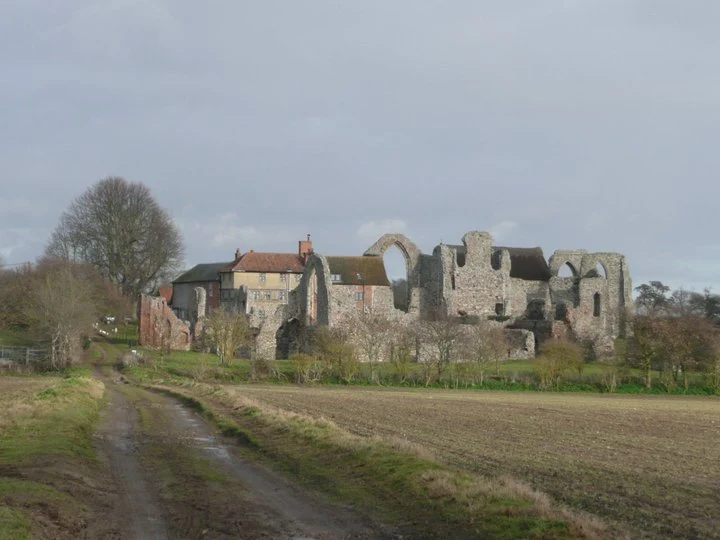
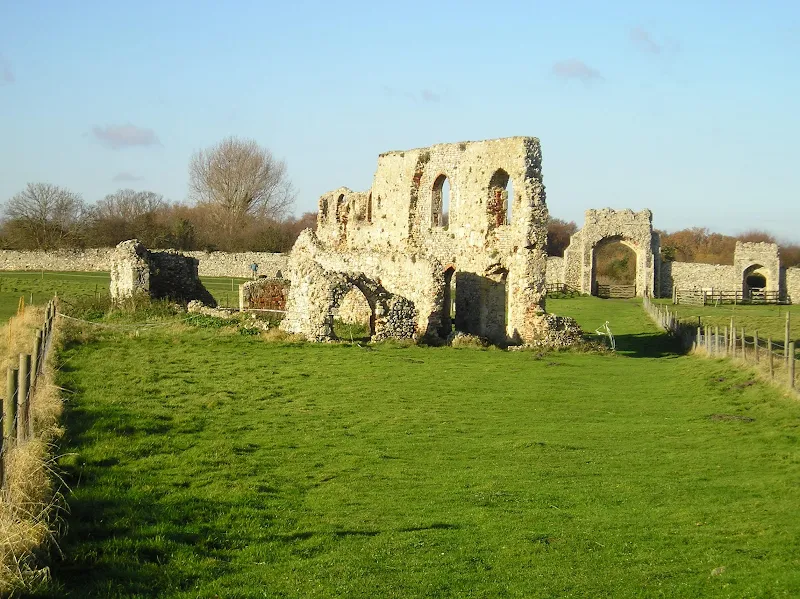
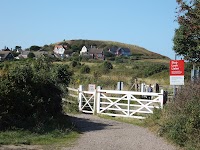
The area now known as Minsmere was recorded in the Domesday Book of 1086 as Menesmara or Milsemere citing that it had six households headed by freemen with one plough team. The settlement was based around the estuary to the Minsmere River and there is even a 1237 description of Minsmere being a port. To the south of the estuary was the setting for Leiston Abbey which was constructed in the early 1180's on an island that was connected to the mainland of Leiston by a causeway. However, constant flooding caused by the sea surges forced the premonstratensian canons to move the Abbey inland closer to Leiston. Even so, the Chapel of St Mary was retained and used up until the dissolution of the monasteries in the 16th century. The ruins of this chapel still remain although there is no public access to them.
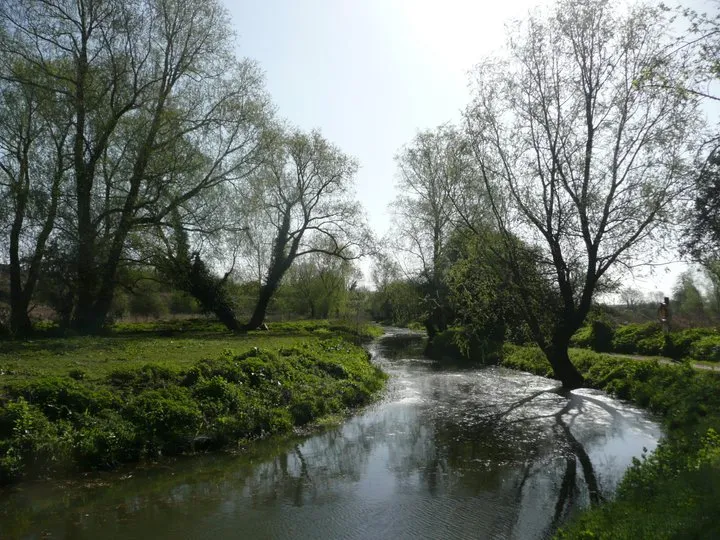
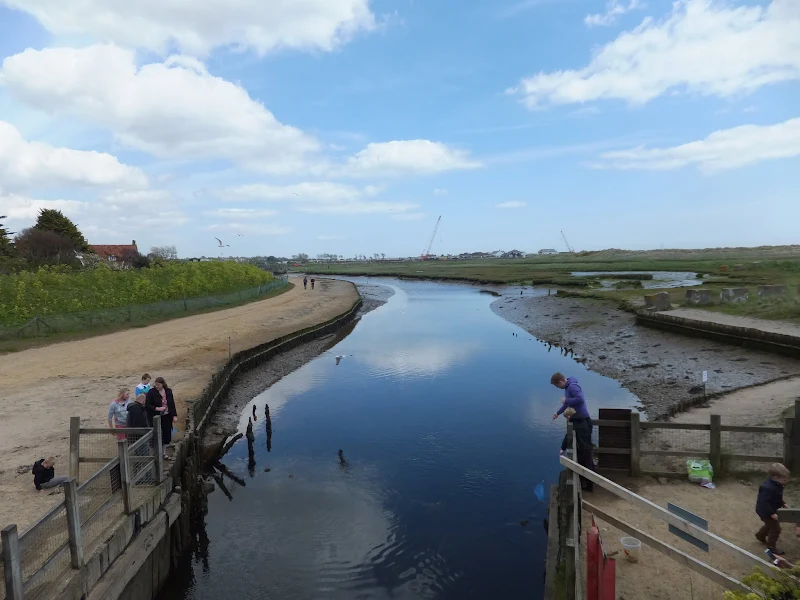
The original course of the Minsmere river followed a natural winding route to the north of the present New Cut with its outfall to the sea near Coney Hill, just south of the Minsmere Cliffs and Dunwich Heath. This outage was controlled with a wooden sluice. It is interesting to note that the Minsmere river takes its name from this area rather than the name of one of its tributaries such as the Yox or Gull. The river rises in Ubbeston near Peasenhall where it is known as the Yox. It then passes through Yoxford at which point it becomes known as the Minsmere River.
There is evidence that peat cutting was performed at Minsmere as early as the 12th century. By the 14th century the hamlet had grown to 20 homesteads but it is said that these were all lost to the sea by the 16th century. Even so, there is evidence that a settlement remained here right up until the second world war. Writing in 1870 in his travelogue of the Norfolk and Suffolk coast, William Alfred Dutt made a mention of the Minsmere River at the haven:
On its banks there was probably a small fishing hamlet; for there is an isolated cluster of old dilapidated cottages near the sluice, some of which are still inhabited.
Certainly there are local memories and stories of the people who lived in these cottages by the sea at Minsmere which is backed up by the brick and stone remains that lay hidden in brambles along the dunes. These seafront dunes used to be known as the Minsmere Benthills, though there is also a reference to these being locally known as the Pentlands.
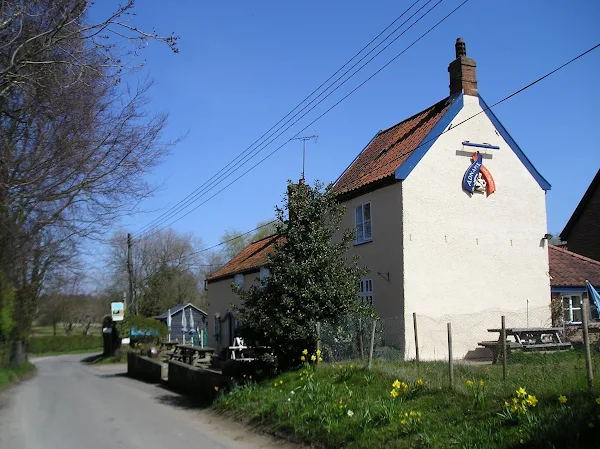
An article appeared in the Autumn 2013 edition of the Leiston Town Neswletter which gave a little more insight to this old hamlet. The article recounts the memories of Councillor Colin Ginger and his family and includes three old pictures of the cottages and the cafe. He describes how his grandparents had lived at Minsmere in what he named as The Sluice Cottage, where his grandfather was in charge of the sluice operations. The cafe was owned by a Mr Sprunt of Westleton between the war years and Mr Ginger states that it had burnt down and was then rebuilt although no dates are given for this event. The hamlet was evacuated during WWII when the houses were used as target practice by the military. Shortly after the end of the war the buildings were demolished.
During the 17th century the Minsmere estuary became blocked by a shingle spit which resulted in a poorly drained fen fed by the Minsmere River and an unnamed watercourse from Leiston. This swampy and marshy ground that was formed from this blocked access became the haven for smugglers during the 18th century. Sizewell Gap was a popular landing place for the illicit cargo which was then whisked away into hiding, a lot of it finding its way to secreted locations on the Minsmere Levels. The smugglers tracks were then obliterated by local shepherds who would drive their flocks across the routes to disguise the locations of the booty. Only the local population would know the way across this marshland and it was said the only method of passage was to jump from tussock to tussock.
In 1808 Anthony Bower, a Lincoln surveyor and engineer reported on the potential drainage of Minsmere Level which he presented to Parliament the following year. The report recommended replacing the wooden sluice which was in a very bad state of upkeep and putting in a new cut for the river that would straighten its course all the way from Reckford Bridge to the sluice. This resulted in the passing of an Act of Parliament entitled 'The Act for Embanking and Draining' which was given Royal Assent 18th May 1810. This set out the authority:
to drain level of Marshes and Fen Lands called or known by the name of the Minsmere level within the several Parishes of Leiston, with the Hamlet of Sizewell, Theberton, Dunwich, Westleton and Middleton cum Fordley, in the County of Suffolk.
The report also recommended using the spoil from the new cut to build up the shoreline defences which were regularly breached. Despite this undertaking, in the winter of 1828 a storm breached the defence and flooded the level to a depth of 2-4 foot. The breach was shored up but the Level has been regularly breached by tidal surges and continues to be inundated during winter storms to this very day.
Following the drainage act was the passing of 'The Leiston and Theberton Enclosure Act' which divided the level into three distinct areas, Minsmere Level East, Minsmere Level West and Leiston. The eastern area had already been enclosed by 1786 and had dykes and sea walls and included a small broad just north of the Chapel ruins which survived until 1813. During the years of 1812/3 a Main Drain was constructed together with embankments and a sluice to connect the rivers to the sea, the iron outfall pipe being provided by Garrets of Leiston.
In 1846 Garrets of Leiston were contracted to build machinery powered by three powerful steam engines to provide better drainage of the Minsmere Level. Drainage was assisted by four windmills, one of which was eventually rescued and restored by the Suffolk Mills Group in 1977 and is now part of the Museum of East Anglian Life in Stowmarket. The drainage enabled the land to be used for agricultural purposes which lasted up until the second world war when the decision was taken in June 1940 to flood the area as a defence against the possibility of invading tanks. In addition, the New Cut bank was wired and mined and a pillbox built into the ruins of the old chapel. Along the beach were set numerous concrete cubes which would also act as anti tank defences, many of which remain in position to this day. Part of marshes was also designated as the Leiston battle training Area in 1943.
The flooding at the start of the war resulted in reed beds becoming firmly established. In 1947 the bird reserve was established and the RSPB leased around 1500 acres from the Ogilvie family who then owned the land. Eventually the land was purchased outright in 1977 with further land being purchased in subsequent years.
Today Minsmere reserve is made up of 0.69 square miles of reed habitat as well as areas of open water, lowland hearth, grassland, scrub, woodland, dune and shingle. The area has become an important breeding, roosting and feeding site for many bird species with over 100 resident species and around a further 240 migratory visitor species. The site is managed with controlled water levels to prevent drought and a seven year rotation of reed cutting. Grazing animals are employed to prevent expansion of scrubland
References
- Official website for Minsmere